About 132 minutes
The Cape Peninsula: Pen and Colour Sketches — Edition Insights
Geography
30,231 recorded words. 9 minutes difference from this book's estimate.
View Gutenberg source #42737
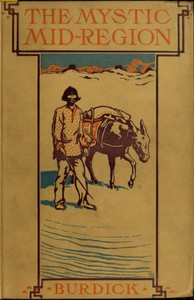
For The Mystic Mid-Region: The Deserts of the Southwest — Inside the Classic, the stored edition analysis reports 32,276 words, 2 hr 21 min estimated reading time, and 6 detected text sections.
The text analysis averages about 21.7 words per sentence, while the detected sections provide another way to judge how the source is divided.
Project Gutenberg metadata also associates the work with “Southwest, New -- Description and travel,” connecting these edition facts with the source record’s subject description.
Explore this collection
These alternatives are selected using recorded categories and estimated reading time.
About 132 minutes
Geography
30,231 recorded words. 9 minutes difference from this book's estimate.
View Gutenberg source #42737About 125 minutes
Geography
28,610 recorded words. 16 minutes difference from this book's estimate.
View Gutenberg source #43051About 124 minutes
Geography
28,328 recorded words. 17 minutes difference from this book's estimate.
View Gutenberg source #47213Search stored excerpts and compare books → Choose by your preferences →
Choices use stored catalog measurements. Estimates vary with reading speed. A shared category is a catalog label, not a claim that two books have the same argument or literary quality.
Search reads excerpt text stored with this catalog and links to its associated Gutenberg record. The connection is stored in the site database; this tool does not recheck that every excerpt is word-for-word identical to that external record. Excerpt search does not cover every chapter and does not verify historical publication dates.
Catalog snapshot checked: 2026-09-25. Coverage: 96 public books, 96 available source excerpts.
Calculated from edition completeness, EPUB availability, text structure and catalogue metadata. Not a user rating.
Total of 100 points, scaled to a 2.5-5.0 range. Editions with an empty description or a missing EPUB file are not scored.
Public-domain source text
The source text is kept in the dedicated reader, separate from this catalogue record and its commentary.
Arthur J. Burdick's The Mystic Mid-Region: The Deserts of the Southwest (1904) opens not with a traveler's log but with a poem—a formal, rhyming meditation that personifies the desert as a keeper of secrets, a realm of "burning, stern, relentless sky." This prefatory verse sets a tone of awe and dread that the prose chapters alternately sustain and undercut. The book's structure moves between lyrical description, natural history, and boosterish accounts of mineral wealth, creating a hybrid work that is part nature study, part economic prospectus.
The opening poem, signed "A. J. B.," establishes a vocabulary of personification and paradox: the desert is a "kingdom of solitude" that "guardest" secrets, its "smile is death." This elevated diction carries into early chapters, where Burdick writes of "teaming in Death Valley" and describes landscapes as "mute appeal unfruitful lie." Yet the voice shifts quickly into a more factual register. In chapter headings like "Curious Plants which Live in the Desert" and "Strange Dwellers of the Desert," the tone becomes taxonomic, almost pedagogical. The juxtaposition suggests a writer uncertain whether to enchant or inform, and the resulting tension gives the prose an uneven, exploratory quality.
Burdick's pacing varies markedly between chapters. The early sections on desert plants and animals move at a deliberate, observational tempo, cataloging adaptations with a naturalist's patience. But in chapters on mining—"The Story of a Streak of Yellow" and "Desert Borax Mines"—the prose accelerates into a near-journalistic urgency. He quotes a mining engineer who declares the Mojave "more talked about in the financial centers of the East than Alaska," and describes borax deposits as lying in "the most desolate, dangerous, and terrifying locality in the United States." These passages read like dispatches from a boomtown, complete with nugget discoveries and speculation about future rushes. The shift from contemplative to commercial is abrupt, and the book never fully reconciles the two impulses.
Throughout the text, Burdick relies on embedded quotations from experts—mining engineers, prospectors, and local officials—to lend authority to his claims. For instance, he reproduces a long passage from an engineer about a placer strike near Needles, including the detail that nuggets were found "imbedded in the pine" of a split pile. These quoted voices introduce a polyphonic quality, but they also fragment the narrative: the reader must navigate between Burdick's own descriptive prose and the reported speech of others. The effect is a layered, sometimes disjointed account that mirrors the desert's own mixture of allure and hazard.
Readers attentive to narrative voice will find in The Mystic Mid-Region a document of its era's competing attitudes toward the desert—as sublime wilderness and as resource frontier. Burdick's shifts in pace and register, from poem to prospectus, from natural history to news report, reveal an author struggling to contain a subject that resists easy classification. The book rewards those who read not only for information but for the tensions embedded in its style.
Sometimes I think about Burdick wandering those desert stretches, how his awe slowly turns to inventory. It reminds me of another old travelogue, one that lingers quietly long after reading, where a city’s layers unfold like that—first mystical, then measured. The same patient shifting of tone stayed with me there. Constantinople, v. 2 (of 2) — Context and Discussion holds that particular hush between wonder and record, exactly. A gentle echo, nothing more.
Answer a few questions and save a private reflection on this device.