Seeing America First, with the Berry Brothers — Key Ideas to Explore

(0 User reviews)   120
In Category - Geography
Colby, Eleanor, Pfeiffer, F. W. [Illustrator] Project Gutenberg 2017 Not confirmed
United States -- Description and travel -- Juvenile literature; Canada -- Description and travel -- Juvenile literature Readers of public-domain and historical texts
Project Gutenberg digital edition en

Edition facts

Words 11,750
Reading time 52 min
Text sections 2

Before opening Seeing America First, with the Berry Brothers — Key Ideas to Explore, the edition data offers a quick orientation: 11,750 words, 52 min estimated reading time, and 2 detected text sections.

The text analysis averages about 24.2 words per sentence, while the detected sections provide another way to judge how the source is divided.

Project Gutenberg metadata also associates the work with “United States -- Description and travel -- Juvenile literature,” connecting these edition facts with the source record’s subject description.

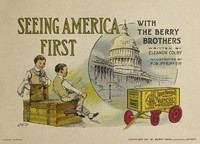
An early 20th-century travelogue narrated by the Berry Wagon Boys, blending boosterish Detroit pride with visits to Canadian capitals, Yosemite, and Columbia River salmon canneries, illustrated by F. W. Pfeiffer.
Share
Editorial Edition Score 4.5/5

Calculated from edition completeness, EPUB availability, text structure and catalogue metadata. Not a user rating.

How this score is calculated
  • Description quality20 pts
  • Title & short description10 pts
  • Source metadata20 pts
  • Text length15 pts
  • Chapters / structure15 pts
  • EPUB file integrity20 pts

Total of 100 points, scaled to a 2.5-5.0 range. Editions with an empty description or a missing EPUB file are not scored.

Edition quality

Read the Text

People had told us that Lake Superior is twenty feet higher than Lake Huron, and we boys were dreading the plunge which our steamer would have to make, but it was as quiet as a mill-pond, for our boat merely sailed into a sort of box or "lock" and the water was slowly lowered till we sailed out on Lake Huron without even a jolt. There are locks between Lake Erie and Lake Ontario, too, for Niagara Falls would not be very easy for a steamer to climb or descend.

It is wonderful to watch the loading and unloading of the huge freight barges. There are great derricks which reach out giant arms and pick up monstrous loads and carry them up or down to deck or dock.

Before the Erie Canal was built, the steamers could only go as far as Buffalo and there the freight had to be taken from the boats and loaded on trains in order to be sent farther east. The Erie Canal crosses New York state like a great water boulevard and connects with the Hudson at Albany and a boat sailing from Chicago can go clear to New York City and get a glimpse of the ocean before starting back to the inland seas.

We Berry Wagon Boys thought we had seen big machinery before, but when we went to the huge steel mills at Gary, Indiana, we felt about as small and unimportant as a couple of undersized ants standing before the Pyramids of Egypt!

Gary is called "the steel capital of the world," yet only a few years ago the spot where the city stands was just miles of dreary sandy beach on the southern shore of Lake Michigan. Columbus discovered America all ready-made, but Judge Gary and the other men who were in the big steel company did not discover Gary, they actually made it! Way up in the Lake Superior country were enormous stores of ore, but there was no coal and no limestone, so the ore had to be taken far away to be made into steel, and the freight made the steel very expensive. These men decided to find a place where the materials could be brought together more cheaply. It had to be on the lake, so that steamers could haul the ore. It had to be near several railroads, so that they could bring the coal and limestone. It had to be near a big city so that there would be a near-by market for the steel. Besides, they needed a lot of space to grow in. They bought 9000 acres and seven miles of that barren shore 25 miles from Chicago and they set their designers to work. The whole thing was built on paper before they began to build it out of concrete and cement. If anything was in their way, they just moved it. They had to move a river and a hundred miles of railroad track. Even then they had to build four of their big blast furnaces right out in the lake. It cost over two million dollars just to get things ready for the buildings.

If you were to go to Gary today and see the fine city they have built for their workers to live in, the paved and electric-lighted streets, the pretty homes, the parks, the wonderful steel plants, the fine harbor and the docks where great steamers are always loading and unloading, you would find it hard to believe that all of these had grown up out of that sand in ten years.

Until today all that we Berry Wagon Boys knew about meat was that we liked our steak rare and our pork well done, and we never thought where all the meat comes from or how it is prepared for the market. Here at the Union Stock Yards of Chicago we have learned many interesting things. Almost every farm in the United States has some cattle, hogs, and sheep, and out in the far west there are huge ranches where thousands of cow-boys are employed to care for the great herds of cattle. In Texas there is a ranch larger than the whole state of Connecticut.

Farmers used to kill their own stock and sell the meat in the nearest town, but now there are great meat-packing centers to which they ship the live stock and where it is turned into canned meat or sent in refrigerator trains or ships to all parts of the world, and because of the intense cold in which it is kept, the meat will remain fresh for months. The packing industry amounts to hundreds of millions of dollars a year.

In the stock yards of Chicago, there are over twenty miles of streets filled with huge pens, each pen containing hundreds of cattle, pigs, or sheep. While they are waiting to be killed, they are fed on good food and watered with pure artesian water, so their last hours are made as pleasant as possible.

If the creatures could know how very useful they are to be, it would be quite a comfort to them, for besides being made into dried, canned, smoked, or fresh meat, they furnish materials for fertilizer, brushes, oils, glue, lard, leather, hairpins, mattresses, and many other things. The packers say that they can use every part of an ox but its kick and every part of a pig but its squeal.

After the meat is prepared for the market, it is kept two days in a great chilling room where ten thousand sides of beef can be chilled at one time.

It was interesting to see the sausage meat being pressed into the intestines of the pigs, for the big machines can fill a mile of skins a minute. We saw them making lard, too, and are proud to say that American lard is shipped all over the world and is considered the best. The reason that American meat products are so good is because the inspectors do not allow any carelessness.

Chicago has so many fine sky-scrapers that we Berry Wagon Boys had almost passed the splendid Harvester Building with just a glance when the man we were with stopped us and said: "Take a good look at that building, for if a boy had not had ideas and perseverance, it would never have been built. His name was Cyrus McCormick, and he lived in Virginia. In the blacksmith shop on his father's farm, Cyrus and his father used to make lots of labor-saving things and the boy decided that he would invent a machine which would harvest the wheat better and more quickly than could be done by hand. He spent every spare minute working on the invention and was twenty-one years old when he saw his first reaper at work in the harvest field. He thought that every farmer would want to buy one, but it was ten years before he sold his first machine. Soon after this he sold another and after that, the orders came so fast that he went out west to the little city of Chicago, which was quite young in 1847, and built his first factory. This factory was the father of the nineteen huge factories in which the International Harvester Company now makes every machine that a farmer needs for any season and any crop." We saw only three of these plants, but when we had been through the McCormick Works, the Deering Works, and the steel mills and had seen all the wonderful things that are done in those factories, we did not wonder that America is famous for its farm implements.

People complain a lot about the high cost of living, but if the grain had to be planted and plowed and harvested by hand, I guess the American kiddies would have to eat their bread and jam without the bread.

We Berry Wagon Boys are visiting our Uncle Silas who owns a great farm of fifty thousand acres in the northwest. When we look out over the big wheat fields that stretch for miles, it is like looking out over a great yellow sea, only the waves are made of wheat instead of water.

Uncle Silas says that wheat is among the earliest known foods, and that bread is the earliest known cooked food. The people of Egypt were eating wheat bread four thousand years ago, only it was not like the bread we have today. It was called "koscoussoo," and consisted of flour and water cooked together in a basket over boiling water. Wheat was brought to America by our forefathers, and George Washington was a great wheat grower for those days. He had a mill at Mount Vernon and shipped flour to the West Indies.

When Uncle Silas and Aunt Mollie came west thirty years ago, this country was just bleak prairie and one could travel miles without seeing a sign of human life. They lived in a mover's wagon while building a sod house. After three years they built a four-room house and they were as proud as kings. As fast as they made any money they bought more land, so now they own miles of this wonderful country.

It is great to see the threshing machines out here. They mow down those wheat heads just as the great machine guns across the sea mow down the armies. Some of these machines are drawn by twenty or thirty horses, and it takes as good a horseman to handle all of those horses as to do chariot races at a circus. One of these threshers comes along through the grain like a great giant, and with its huge claws and arms and feet, it cuts the wheat, threshes it, puts it into bags, and weighs it.

The grain is shipped to some city and stored in enormous elevators until it is sold to the millers to be made into flour.

Uncle Silas says that the life of the modern farmer is far from "slow." There is something doing every minute, and when he looks out over those fields of waving wheat and realizes that he is growing enough food there to keep thousands of people happy and healthy, he would not exchange places with anyone.

Most boys and girls think of a park as a little plot of ground with a fountain in its center and neat little flower beds arranged primly around. The Yellowstone Park is almost as large as Connecticut, and Uncle Sam has given it to America so that no one can ever spoil its beauty by building factories or cities there. Think of a park containing mountains two miles high, cataracts higher than Niagara, great canyons, and geysers which are the wonder of the world. There are hundreds of these geysers which are huge natural fountains spouting mud, boiling water, steam, and minerals. They burst out of the ground and then sink back leaving pools where wonderful colors seem to be painted on the rock. Each geyser has its own name and its own habits. Old Faithful used to spout every sixty minutes to the very second, but lately takes a little more time. He is getting old, but he still sends up a column of boiling water and steam 150 feet high, which is "going some." The Giant deserves its name for it spouts 200 feet, while the Black Growler fusses and mutters a lot but does very little real work. The Constant sends up a spout every minute with only a few seconds for rest in between.

You would not think that with all this boiling water there could be any lakes of cold water, but the Yellowstone Lake is as clear and cold and its fish as fine as any you could find in the world. People claim that they have caught fish in the lake and then without moving a foot have cooked them in a pool of boiling water. We could believe this only we do not think the soldiers would let anyone fish there. Soldiers are stationed all around the park to keep tourists from carrying off souvenirs. Some tourists would run away with everything but the geysers if they had a chance. A geyser would be pretty hard to carry in ones suitcase.

This great park has plains where bison run wild, great cliffs where the eagles rear their young, and forests where Mr. Grizzly makes himself quite at home. He even comes up to the hotels and carries off garbage and though he seems quite tame, we boys did not feel like getting too familiar with him.

Glacier Park is way up at the northern edge of Montana. If it were a little farther north, it would be a Canadian citizen instead of being subject to Uncle Sam. It was the favorite hunting ground of the Blackfeet Indians but about 27 years ago copper was discovered there and Uncle Sam thought that the mines should be properly opened so he bought the land. There was not enough copper to make mining pay, but there was a stock of scenery so large that it would last forever, so Uncle Sam gave the land to his big family for another playground and the Blackfeet Indians now live on a reservation east of the park.

There is lots of big game among the mountains, and the Rocky Mountain sheep and mountain goats seem able to climb up the steep sides of the rocks as easily as a fly goes up a wall.

The park is named from its 60 glaciers, but is even more famous for its 250 lakes. People used to think that they had to go to Switzerland to see the most beautiful lakes in the world, but before long the Swiss will get the habit of "Seeing America First," for the lakes of Glacier Park are as fine as those in the Alps. There are tiny little ones high up among the mountains and large ones in the valleys and they are so deep and clear and still that they are like mirrors. The streams are wonderful, too. At the Triple Divide, the water separates and goes in three directions. One stream flows to the Pacific, another to Hudson Bay, and the third to the Gulf of Mexico.

Perhaps you think that tourists have to endure a lot of hardship to visit this wild spot, but if you could see some of these hotels (built like Swiss chalets), and could eat some of the meals they serve, you would change your mind. The fish from these mountain lakes have a flavor that beats anything we have ever tasted, and we have lived beside the Great Lakes all our lives. If we could stay here longer we should join a camping party, for they have great fun living in tents, fishing, hunting, tramping over the trails, and climbing glaciers. We will do our glacier climbing when we get to Ranier Park.

Uncle Sam has given the American people eleven national parks covering over seven thousand square miles of the finest scenery in the world, and Rainier Park in the State of Washington, is one of the most wonderful of these. Think of a park containing one mountain nearly three miles high, and having 28 rivers of ice or "glaciers" flowing down its sides. Thousands of years ago Mount Rainier was a hot-tempered old fellow and he and the smaller peaks in his range spent their time belching out fire, but at last in a frightful fit of passion, Mount Rainier blew off his entire head and where his brains were is now a huge crater filled with thousands of feet of ice. The other volcanoes put out their fires long ago, too, and now they all have snowy beards on their wrinkled old cheeks.

We climbed up one of the glaciers and it surely was "some climb." Everyone in the party used an alpine stock and it gave us fellows a kind of shaky feeling in our knees when we could look down a wall of ice a thousand feet deep into a great crevasse or crack. We were glad to stand pretty close to the guide who was big and strong and who knows these glaciers as we boys know the streets of Detroit. We never knew before that ice can flow like water only much more slowly. The center of a glacier moves down the mountain about 16 inches a day. There are tiny little insects living in this ice. We saw them through the microscope and they were hopping around as though their feet were cold. There are wee pink plants growing in the ice in some places and they make the ice look rose colored. They are so small that you cannot see them without a microscope.

Rainier Park is one of the famous wild flower gardens of the world. Blooming at the very edge of the snow fields are miles and miles of wonderful flowers. There are daisies, columbine, larkspur, and many others and they are much taller and finer than those in common gardens. Grown-ups tell us boys that if we associate with great people we shall grow to be like them, and perhaps these flowers grow so big and tall from living so near Mount Rainier and the great cedars and firs. We do not wonder that this part of the park is called "Paradise Valley."

Fishing here on the Columbia River is not just a sport. It is a business which brings in millions of dollars a year. There are single factories where a half a million cans of salmon are put up in one day, and over a hundred million dollars worth of salmon have been taken from the Columbia river since the white man first came here.

The large salmon are called chinook, and one of these fish weighing eighty pounds is not an unknown thing, though their average weight is about twenty pounds. There are many small kinds of salmon, so the chinook is called "the King of Salmon."

The baby fish are hatched way up in the mountain streams and as they grow friskier and larger, they swim down the stream into the Columbia river and on to the ocean where they stay about four years till they are quite grown up. Then they get homesick for the scenes of their childhood, and, choosing their mates, they start back to a sort of "home-coming." It takes a long time, for the current is strong, but if they are lucky enough to miss getting caught and canned, they arrive at the "spawning place" after several months, and lay their eggs, and soon their little fish children are starting out to see the world as their parents did before them.

The salmon are caught with traps, nets, and water wheels, and ninety thousand fish have been caught at once in one of the large netted traps while one wheel has caught fifteen thousand fish in a day. These wheels are covered with netting and are turned by the swift current of the river, which raises the fish into the air and tosses them into the boat.

When the boat is full, it is unloaded at the canning factory at the edge of the river. The Chinese men who kill the fish are very swift, and the machines which clean the salmon can handle about forty-five a minute. They are then cut into pieces by machinery before being packed into cans, and in these cans the salmon is steamed till thoroughly cooked.

We went through the warehouse of a great canning factory, and it seemed as though there could not be enough people to eat all that fish, but Columbia river salmon always finds a market. It is famous everywhere.

There is no country in the world which has kept for its people such playgrounds as we have in the United States. Probably that is because we are the only people who have an Uncle Sam. A king or an emperor would never dream of putting great tracts of land aside for his subjects to enjoy without paying a cent of toll or a penny of taxes, but our Uncle Sam has given his nephews and nieces hundreds of miles of the most wonderful land in the world and these huge parks belong to you and to us just as much as they do to the Astors and Vanderbilts.

The Berry Wagon Boys announce themselves as youthful travelers determined to "see America first," a slogan the book treats with earnest enthusiasm. Their home base, Detroit, is described with civic pride: the city doubled in population in a decade, its river is "too fine and dignified" to flood, and Berry Brothers varnish is touted as the best. This commercial tie—the book was copyrighted by Berry Bros., Incorporated—colors the narrative from the start, blending geography with product placement.

The opening also establishes a pattern of mixing booster statistics with child-friendly analogies: Detroit grows "as fast as Jack's famous beanstalk," and visitors "oh" and "ah" as if taking a singing lesson. The voice is colloquial and direct, addressing readers as fellow "nephews and nieces" of Uncle Sam.

A Wagon-Boy Voice and Its Limits

The narrator adopts a collective first-person plural—"we Berry Wagon Boys"—creating a sense of shared adventure. The tone is informal, with exclamations and rhetorical questions: "One thing is certain, if the varnish on your floors and furniture is the best that can be bought, it came from BERRY BROTHERS." This direct address to a young audience is consistent, but the excerpts reveal gaps: the narrative jumps from Detroit to Canada to the Pacific Northwest without transitional explanation. Readers must infer that the brothers are traveling, perhaps by rail or auto, though the text does not specify. The voice remains cheerful and assured, even when describing industrial processes like salmon canning, where Chinese workers are noted as "very swift"—a detail that reflects period attitudes without commentary.

Numbers, Wonders, and Boosterism

The book is studded with concrete figures: Detroit grew from 400,000 to 800,000 in ten years; a single salmon wheel caught fifteen thousand fish in a day; a redwood tree began growing "at least 2000 years before Christ." These numbers serve as marvels, not statistics. The tone is consistently awestruck—the Parliament buildings "make one think of kings and queens," and Yosemite's El Capitan is visible sixty miles away. Yet the boosterism is selective: Detroit's manufacturing might is celebrated, but the environmental cost of canning is absent. The salmon's life cycle is anthropomorphized—they get "homesick" and return for a "home-coming"—a storytelling choice that humanizes natural history for young readers.

National Parks as Democratic Playgrounds

A recurring theme is that America's national parks belong equally to all citizens, unlike the preserves of kings. The narrator asserts that "a king or an emperor would never dream of putting great tracts of land aside for his subjects to enjoy without paying a cent of toll." This democratic framing is reinforced by the description of Yosemite: the valley floor feels like summer while peaks hold perpetual snow, and giant sequoias have dwarf neighbors sixty years old but pencil-thin. The Bridal Veil cascade is called "the birthplace of the rainbow." The parks are presented as accessible wonders, though the excerpts do not show the Berry Wagon Boys actually hiking or camping—they observe from roadsides or guided tours.

Industrial Tourism and the Columbia River

The visit to a salmon cannery offers a rare glimpse of industrial process in a travel book for children. The description is methodical: fish are caught in traps, nets, and water wheels; Chinese workers kill them swiftly; machines clean forty-five fish per minute; cans are steamed. The scale is emphasized—"ninety thousand fish have been caught at once"—and the market is global: "Columbia river salmon always finds a market." The tone remains admiring, not critical. This section contrasts with the pastoral Yosemite scenes, showing that the Berry Wagon Boys value both natural wonders and human ingenuity. The salmon life cycle is told as a story, ending with "little fish children starting out to see the world," mirroring the brothers' own journey.

Readers should note that the excerpts cover only the beginning and a few later passages; the middle of the journey is absent. The book's structure appears episodic, moving from city to natural wonder to industrial site without a strong narrative arc. The Berry Wagon Boys remain cheerful observers, never encountering conflict or hardship. For a first reading, pay attention to how the author balances factual reporting with a promotional voice—and how the illustrations by F. W. Pfeiffer might complement or complicate the text's boosterish tone.

I remembered the Berry Brothers’ boosterish pride along the Columbia, that odd mix of industry and wonder. It struck me how a road can hold a nation’s story, much like the old highway in The Exeter Road: the story of the west of England highway — Edition Insights, where every mile felt like a layer of quiet lives, not just a route to somewhere new.

There are no reviews for this eBook.

0
0 out of 5 (0 User reviews )

Add a Review

Your Rating *
  • ...
    Victor Baxter - 3 weeks ago
    An exhilarating ride across America with the Berry Brothers! This book captures the spirit of early 20th-century travel, with vivid accounts of scenic landscapes and mechanical challenges. The camaraderie between the brothers shines through, making it a delightful and inspiring read. A wonderful piece of Americana.

  • ...
    Amanda Palmer - 2 weeks ago
    The book provides an interesting firsthand look at the Berry Brothers' cross-country adventure. Some passages are thrilling, while others are mundane day-to-day details. It's an enjoyable read for fans of classic travel tales, but the pacing could be better.

  • ...
    Nicole Clark - 1 week ago
    While the topic is promising, the execution is dull. The narrative focuses too much on car maintenance and trivial events, lacking the dramatic highs of a great adventure. The writing style is also outdated and dry. I struggled to finish it.


Reader reflection

Record your reading impressions

A brief reflection can help important ideas stay with you longer.

Your progress 0 / 10
1

Where are you in your reading?

2

What was your overall reaction to the book?

3

Is this a title you would suggest to others?

4

How demanding did the text feel?

Related eBooks