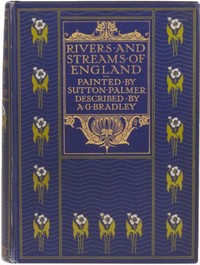
The Rivers and Streams of England — Edition Insights

(4 User reviews)   557
In Category - Geography
Bradley, A. G. (Arthur Granville), 1850-1943, Palmer, Sutton, 1854-1933 [Illustrator] Project Gutenberg 2014 Not confirmed
England -- Description and travel; Rivers -- England Readers of public-domain and historical texts
Project Gutenberg digital edition en

Edition facts

Words 65,326
Reading time 285 min
Text sections 11

The Rivers and Streams of England — Edition Insights can be approached with a clearer sense of reading commitment from its source measurements: 65,326 words, 4 hr 45 min estimated reading time, and 11 detected text sections.

The text analysis averages about 32.9 words per sentence, while the detected sections provide another way to judge how the source is divided.

Project Gutenberg metadata also associates the work with “England -- Description and travel,” connecting these edition facts with the source record’s subject description.

Bradley's essays on English rivers, organized by watershed, blend personal angling experience with landscape observation. The opening preface admits the difficulty of selecting from scores of streams, then proceeds to group rivers by region, favoring those he knows best. The Avon chapter exemplifies his method: mixing topography, architecture, and local history while acknowledging omissions.
Share
Editorial Edition Score 4.8/5

Calculated from edition completeness, EPUB availability, text structure and catalogue metadata. Not a user rating.

How this score is calculated
  • Description quality20 pts
  • Title & short description10 pts
  • Source metadata20 pts
  • Text length15 pts
  • Chapters / structure15 pts
  • EPUB file integrity20 pts

Total of 100 points, scaled to a 2.5-5.0 range. Editions with an empty description or a missing EPUB file are not scored.

Edition quality

Read the Text

Produced by Chuck Greif and the Online Distributed Proofreading Team at http://www.pgdp.net (This file was produced from images available at The Internet Archive)

THE RIVERS AND STREAMS OF ENGLAND

AMERICA THE MACMILLAN COMPANY 64 & 66 FIFTH AVENUE, NEW YORK

AUSTRALASIA THE OXFORD UNIVERSITY PRESS 205 FLINDERS LANE, MELBOURNE

CANADA THE MACMILLAN COMPANY OF CANADA, LTD. ST. MARTIN'S HOUSE, 70 BOND STREET, TORONTO

INDIA MACMILLAN & COMPANY, LTD. MACMILLAN BUILDING, BOMBAY 309 BOW BAZAAR STREET, CALCUTTA

THE RIVERS & STREAMS OF ENGLAND

PAINTED BY SUTTON PALMER

DESCRIBED BY A. G. BRADLEY

PUBLISHED BY 4 SOHO SQUARE

ADAM AND CHARLES LONDON, W

Though this is not a book on angling, a life-long attachment to the fly-rod on the part of the author, and to the delightful scenes into which such predilections notoriously lead one, makes it at once more difficult and more easy to write than if one were approaching the subject as a stranger to the atmosphere, and merely to "write round" the pictures Mr. Palmer has so admirably painted. But in my case it is by no means only this. A predilection for British landscape in general, and all that thereby hangs, has stimulated a far wider acquaintance with it than any mere angling rambles could achieve, and resulted in the publication of several books concerned with such things, and covering more or less about twenty counties. I feel this explanation is desirable, lest the note of intimacy with many far-sundered streams, in allusion and otherwise, that must occur in these pages may be suspect. The more so, as from the fascination of the Cook's ticket or what not, comparatively few of my countrymen have any considerable knowledge of their own land. The Rhine is certainly better known than the Wye, and the Danube probably than the Severn.

But these very experiences made the first proposal to write a book, other than a mere encyclopædia, within a brief space on such a big subject, seem almost hopeless. Rivers and streams from every direction, by scores, came surging out upon the memory at the very thought of it, in quite distracting fashion. It was finally agreed, however, that the literary part of the book should take shape in a series of essays or chapters dealing with the rivers mainly in separate groups or water-sheds, leaving the proportions to my discretion. Capricious in a measure this was bound to be. Selection was inevitable. It is not of supreme importance. _Caeteris paribus_, and without diverging more than necessary from the skilful illustrator, I have dealt more freely with the rivers I know best, and also with those I hold to be more worthy of notice. There are, of course, omissions, this book being neither a guide nor an encyclopædia, but rather a collection of descriptive essays and of water-colour sketches covering, though necessarily in brief, most of the groups. In this particular subject there is happily no need for author and illustrator to keep close company in detail. What inspires the pen, and in actual survey stirs the blood, is often unpaintable. What makes a delightful picture, on the other hand, tells sometimes but a dull tale in print. I have had to leave to the artist's capable brush, owing to the necessary limitations of the letterpress, several subjects; a matter, however, which seems to me as quite immaterial to the general purport of the book, as it is unavoidable. But otherwise I think we run reasonably together. At first sight the omission of the Thames in description may seem outrageous. A moment's reflection, however, will, I am sure, conduce to a saner view. Illustration is wholly another matter; but to attempt ten or fifteen pages on that great and familiar river, dealt with, too, in bulk and brief by innumerable pens, that could serve any purpose or gratify any reader, seems to me a fatuous undertaking. The Severn, on the other hand, as great, almost as important as the Thames, and still more beautiful, is by comparison an absolutely unknown river, and we have given it the first place.

THE BORDER RIVERS 101

THE RIVERS OF DEVON 161

THE RIVERS OF THE SOUTH-EAST 209

THE YORKSHIRE DALES 227

AN EAST ANGLIAN RIVER 269

LIST OF ILLUSTRATIONS

1. The Derwent, High Tor, Matlock _Frontispiece_

FACING PAGE 2. The Severn, near Arley, Shropshire 6

3. The Severn, Bridgenorth, Shropshire 18

4. The Severn, near Cam, Gloucestershire 30

5. Chepstow with Wye and Severn 34

6. The Wye, Haddon Hall, Derbyshire 38

7. The Wye, Hay, Breconshire 40

8. The Wye, Ross, Herefordshire 46

9. The Monnow, Old Bridge, Monmouth 52

10. The Wye, Symond's Yat, Herefordshire 60

11. The Wye, Tintern, Monmouthshire 62

12. The Thames, looking towards Henley 64

13. The Avon, near Salisbury 66

14. The Thames, the Bells of Ouseley, Old Windsor 70

15. Stapleford on the Wiley 82

16. The Itchen, St. Cross, Winchester 88

17. The Itchen, and St. Giles' Hill, Winchester 94

18. The Dove, Dovedale, Derbyshire 100

19. The Tyne, Hexham, Northumberland 102

20. The Coquet, and Warkworth Castle, Northumberland 124

21. The Eden, Samson's Chamber, near Carlisle 136

22. The Eden, near Lazonby, Cumberland 140

23. The Derwent, Grange, Borrowdale 142

24. Skelwith Force, near Ambleside, Westmoreland 144

25. The Derwent, Borrowdale, Cumberland 146

26. The Brathay, Langdale, Westmoreland 150

27. The Thames, Backwater by the Islands, Henley 152

28. The Avon at Clifton 154

29. The Avon, Stratford, Warwickshire 158

30. A Glimpse of the Thames, Kew 160

31. The Hamoaze, Devonport, from Mount Edgcumbe 162

32. The Dart, Dittisham, Devon 166

33. The Erme, Ivy Bridge, Devon 172

34. The Tamar, Cotehele, Cornwall 178

35. The Tamar, near Calstock, Cornwall 182

36. The Tavy, Tavistock, Devon 186

37. The Okement, Oakhampton, Devon 192

38. On the West Lynn, Lynmouth, Devon 198

39. The Exe, Countess Weir, Devon 200

40. The Exe, Topsham, Devon 202

41. The Axe, Axmouth, Devon 204

42. The Thames, Eton 208

43. The Thames, Richmond 208

44. The Arun, Arundel Castle, Sussex 208

45. The Arun, Amberley, Sussex 210

46. The Ouse, near Barcombe Mills, Sussex 212

47. The Ouse, near Lewes, Sussex 214

48. A Stream, near Leith Hill, Surrey 216

49. The Rother, Fittleworth, Sussex 216

50. The Wey, Surrey 218

51. The Medway, Aylesford, Kent 220

52. The Wey, Elstead, Surrey 222

53. The Medway, Maidstone, Kent 224

54. The Medway, Rochester 226

55. The Trent, Nottingham 228

56. The Wharfe, Bolton Abbey, Yorkshire 230

57. The Wharfe, the Strid, Yorkshire 234

58. The Wharfe, Barden Tower, Yorkshire 238

59. The Nidd, Knaresborough, Yorkshire 242

60. The Ure, near Ripon, Yorkshire 246

61. The Ure, Aysgarth Force, Yorkshire 250

62. The Swale, Richmond, Yorkshire 252

63. The Swale, Richmond, Yorkshire 254

64. The Swale, Richmond, Yorkshire 256

65. The Swale, Easby Abbey, Yorkshire 258

66. High Force, Tees, Yorkshire 260

67. The Tees, Cotherstone, Yorkshire 264

68. The Tees, Barnard Castle, Durham 266

69. The Stour, Bergholt, Suffolk 268

70. The Ouse, near St. Ives, Huntingdonshire 268

71. The Ouse, Huntingdonshire 270

72. The Ouse, Houghton Mill, Huntingdonshire 272

73. The Ouse, Hemingford Abbots, Huntingdonshire 274

74. The Ouse, near Holywell, Huntingdonshire 276

75. The Stour, near Dedham, Essex 278

_Sketch Map at end of Volume._

RIVERS AND STREAMS OF ENGLAND

There is surely some peculiar fascination in the birthplace of a famous river when this lies in the heart of moors and mountains. For myself, I admit at once to but scant interest in the infant springs of even such slow running rivers as I have some personal affection for. There is neither mystery, nor solitude, nor privacy about their birth. They come into the world amid much the same surroundings as those in which they spend the greater part of their mature existence--amid ploughed fields, cattle pastures, and villages, farmyards, game covers, and ozier beds. When full they are inevitably muddy, and when empty are very empty indeed; lifeless, and mute at the best, at the worst actually dry. The river of low-country birth acquires, in short, neither character nor quality worthy of consideration till as a full-grown stream it can trace a shining coil in the valley, or reflect the shadow of spire, bridge or mill, of willow or poplar.

How different is the source of a mountain-born river, above all when it boasts some name famous in story, and is to become the feeder of historic cities and bearer of great navies. Its hoarse voice plashing amid the silence of the eternal hills strikes the chord responsive to such scenes as these with singular force, and a little louder perhaps than its comparatively nameless neighbour, which leaves their common watershed for some other sea. As the lowland landscape of England is unique, so the mountain and moorland solitudes of these two islands are quite different from anything else in the whole universe. The mountain regions of England and Wales, Scotland and Ireland, exhibit, to be sure, some slight variety of detail, due partly to human and partly to natural agencies. But such differences are positively trifling compared to the contrast they each and all present to any other of the waste places of the earth, unless perhaps some wilder portion of Brittany may be a qualified exception. This delightful singularity, to my thinking a wholly favourable one, is not sufficiently understood or appreciated. There are tremendous masses of snow and crag and evergreen timber, as well as marvellous formations of naked rock, in four continents appealing to practically another sense. There are lower ranges, too, on the scale of our own mountains, in many parts of the world draped in timber from base to summit, which again are of another family, and those who have lived or been much among them know how unsatisfactory by comparison are their limitations, how obstructive both of free movement and of outlook.

But there is nothing anywhere resembling our open hills where heather and bog grasses of many hues, where emerald turf, spreading bracken and golden gorse, broken with cliff and crag and scaur, invite the wanderer to a delightful and easy intimacy with their innermost haunts. Here you may ramble practically at will, with the unobstructed glories of earth and air always before your eyes, the fresh tempered breezes of our gulf-stream-washed island in your lungs, your feet pressing upon plants and grasses all instinct of a soil that knows nothing of fierce heats and binding frosts as those terms are understood in most other lands. And then, again, how futile to parade the altitude of our British mountains as evidence of insignificance. They laugh to scorn all such arithmetic, and many times in a single day will wrap themselves in some magic veil, and lift their peaks and shoulders round you, till scale and altitude as expressed in figures become practically a thing of naught. The obvious of the past garish and sunny hour, when their modest measurement proclaimed itself to any reasonably experienced eye, has vanished, and you find yourself confronted by heights that lack absolutely nothing in stature and dignity, and are in effect mountains of 10,000 feet. Everything that shapely form and atmosphere can achieve in the way of effect these little mountains of ours are capable of. Our much maligned climate not merely clothes them in a chequered mantle of green and russet, of grey, purple, or saffron, only less in winter than in summer, but gives them those ever-changing moods and aspects that few people who know both would as a permanency exchange for all the sun glare of the earth. And how solitary are the hollows of these hills where rivers rise: nay, often more than that, and little short of awesome. Here again, perhaps, comes in the quite undisturbing reflection that there is a railway within five miles and a town possibly within ten! What does it matter, when nobody ever comes here, and there is not a trace visible anywhere of man's handiwork but possibly the dark line of some stone dyke built two centuries ago? The very consciousness that this is in populous Britain makes the wild wilder, the silence stiller, the solitude more solitary.

For myself, I know of a score of such valley heads in the North and Wales, whence streams and rivers have their birth, that provoke a feeling of positive and pleasurable creepiness, such as the wildest woods and the remotest prairies never touched me with. Whether opening and shutting in a driving winter mist, or with their high rocky shoulders turned gloomily from the sun on a fine autumn morning, these inner sanctuaries and water-sheds where so many of our English rivers rise seem as if they gathered the silence of unlimited wastes and distilled its very essence. The very sounds that break their solitude, intensify it: the plashing of the tiny stream when it has struggled out of the meshes of the high bog that gives it birth, and is taking its first leap for liberty and independence down the rocky ledges of the precipice towards the world below, the mournful call of the curlew, the fitful, plaintive bleat of the mountain sheep, or the faint rattle of stones misplaced by its nimble feet. Poets have written of the "startled air," and some of them perhaps have used the phrase but tritely, and themselves but half suspecting the true felicity of the metaphor. In these sombre chambers of the hills, walled in upon every side, the stillness seems literally to grasp at every slight sound and cling to it with strange vibrations and lingering echoes, which remind one how utterly alien to these places are the common sounds of the everyday world that pass unnoticed--a world so ridiculously near and yet so infinitely remote.

Among the outstanding geographical facts which used to be hammered into the heads of schoolboys was that of Plinlimmon being the parent of both the Severn and the Wye. Many poems both in Welsh and English have been inspired by this picture of two infant streams springing from the bosom of the same mountain, and after following widely sundered courses through various counties, meeting again as great rivers, just in time to mingle their waters before merging them in the brine. It would be a pretty conceit even if it were not in the case of these two rivers an actual fact. Whether

it is on this account, or because of the huge bulk and prominent situation of Plinlimmon, many "eminent geographers" of not very remote days wrote it down for the benefit of generations of misguided students as the third loftiest mountain in Wales. But it is not even in the first rank, being less than 2500 feet. There are several mountains in South Wales alone of greater altitude and more graceful shape. But Plinlimmon, all the same, is a fine upstanding mass of wild bog, linked upon both sides to far-spreading solitudes, and worthy to be the mother of the greatest and of the most beautiful river respectively in England or Wales.

That the former deserves the epithet is a mere geographical fact. That the Wye contains a greater mileage of the highest types of British scenery than any other river, will surely be conceded by any one sufficiently equipped with a knowledge of British rivers to pronounce an opinion worth having and not disqualified by too intimate personal association with some other possible claimant. For it is the only river in the country that rises to the highest scale of physical beauty and distinction as we know them in Britain, both in its earlier and its later stages. A few large rivers, notably the Cheshire Dee, the Usk, the Tynes, the Tees, and of course many smaller ones in the north and west, compare with the Wye, though few surpass it in their higher reaches, being all distinguished by the same type of rugged and mountainous scenery. But none of them, after they have left such associations behind and become by comparison low-country rivers on their progress to the sea, break out again like the Wye for such a long period of their later course in scenes that vie with those of its youth and are among the recognised gems of British scenery.

The fountain springs of the Severn and the Wye are less than a mile apart on the long slope of Plinlimmon. The one flowing north-east, the other south-east, there is little to choose between them as they fume and fret in their sombre mountain cradles or sparkle among the narrow stone-walled meadows, the little white-washed sycamore-shaded homesteads of the upland farms. The Wye has greater things in store for her than even the wild foothills of Plinlimmon as she dashes off into the mountain gorges of Radnorshire and Brecon. But the Severn, though flowing always from source to mouth through a landscape consistently fair and often striking, seldom rises to the level maintained by her younger sister for more than half of her journey to the sea. The Severn, called hereabouts the Hafryn by the Welsh, may be said to emerge into civilization near the little Montgomeryshire town of Llanidloes, noted for its sheep fairs and its fish poachers. Here it meets, to follow northwards the only railroad which even now links North and South Wales. This will have brought with it over the wild heathery moorland watershed between Wye and Severn, where dark brooding hills enclose the region of Pant-y-dwr (Hollow of the waters), the brown streams of the Tylerch. The Clywedog meeting the other two just below their junction, the Severn now becomes a lusty little river, brawling incessantly upon a wide stony bed.

Of the thousands of tourists who every season travel on the Cambrian railway to the Welsh watering-places, few probably realise that the little trout stream which prattles in and out of the line in the high country around Moat Lane Junction bears the name of the greatest, though truly the second in fame, of English rivers. From first to last the Severn is faithful to Montgomeryshire as the Welsh county of its birth. From Blaen Hafryn, its source on Plinlimmon, just within the county bounds, for some 50 miles straight measure along its valley--all the way, indeed, from Llanidloes to the Breiddon Hills--it waters the richest pastures and the fattest corn lands of the ancient kingdom of Powys Fadog. But if the Severn drains the richest portion of this most delectable and highland country, it must not be supposed that its environment is tame or its streams lazy. Everywhere to the right and to the left lofty hills, though for the most part somewhat back-lying, bound the limits of the vale, while now and again a glimpse of some distant mountain serves to remind one that Montgomeryshire is in the main a mountain county. For the Severn valley is so intercepted with small hills, so richly wooded, so ornate in places with the park lands and foliage of country seats, so sprinkled with pleasant villages, one is apt to forget that the little streams hurrying down to the river from the north come from a really wild Wales beyond, while lying back to the south the regions of Kerry and Clun speak in their very names to the initiated of the spirit of solitude.

But the human or certainly the historic interest of Montgomeryshire and much of its visible wealth clusters along this broad and broken vale of the Severn. Newtown and its flannel industries and the name of Pryce-Jones will strike a responsive note in the ear of every British housewife. But the stern fragments of Montgomery Castle, perched on the summit of a rock 350 feet above the river, is perhaps more in harmony with the mood in which we should follow an historic artery through this Border country. The little town, absolutely the smallest and most somnolent county capital in the two countries, lies behind the rocky castle height. The Norman, Roger of Montgomery, was granted this country by his friend and chief William the Conqueror, who appears to have assumed it was in Shropshire, because Offa's Dyke crosses the river near by. This misconception soon became apparent, and though the well-nigh impregnable castle, called always Tre-Faldwin by the Welsh after Roger's constable, Baldwin, was retained in Anglo-Norman hands, it is not too much to say that it was a centre of strife between the Welsh and English for 200 years, till Edward the First completed the conquest of Wales and created the North Welsh counties, this one being fortunate in acquiring the sonorous name which had clung to the castle and lordship. The actual building, whose scant fragments are now so conspicuous and suggestive, was erected by Henry the Third, who in his troubles with his barons was compelled to promise Llewelyn the Second or "the Great" that this should be the uttermost western limit of his pretensions to dominion.

Bradley opens his preface with a frank admission: a lifelong attachment to the fly-rod makes writing about rivers both harder and easier. He knows the scenes intimately, but the sheer number of streams—'surging out upon the memory'—threatens to overwhelm any concise treatment. The solution is a series of essays grouped by watershed, with proportions left to his discretion. He warns that selection is inevitable and capricious, and that he will deal more freely with rivers he knows best.

This personal, almost apologetic tone sets the stage. Bradley is not compiling an encyclopedia; he is offering a guided tour by a knowledgeable companion. The reader should expect digressions, comparisons, and a strong sense of place filtered through one man's experience.

The Preface as a Roadmap

The preface is essential for understanding Bradley's method. He explicitly states that the book is not a mere encyclopedia, but a series of essays. He also reveals his bias: a 'life-long attachment to the fly-rod' and a predilection for British landscape. This explains why certain rivers receive more attention—he knows them from angling rambles. He also notes that many of his countrymen know the Rhine better than the Wye, implying his book aims to redress that ignorance. The preface thus functions as a disclaimer and an invitation: expect a personal, selective, and opinionated journey.

The Avon as a Case Study in Selection

The excerpt on the North Wilts Avon illustrates Bradley's approach. He acknowledges that the other Wiltshire Avon (the chalk stream) has already claimed much notice in a previous chapter, so he will not duplicate. Instead, he focuses on the Bristol Avon, noting its tidal reaches and its role as 'the life-blood of the great port of Bristol.' But he quickly moves beyond harbourage to describe the scenery above the tidal ways: Bradford's Saxon church, the Tudor mansion at Westwood, the Clifton suspension bridge. He weaves in architectural and historical notes—Malmesbury Abbey, Lacock village, country houses from Tudor to Georgian—and offers a reason for their abundance. The passage demonstrates how Bradley uses a river as a thread to connect landscape, architecture, and history.

The Role of the Illustrator

Bradley acknowledges Sutton Palmer's illustrations as the initial impetus for the book. He writes that the literary part was to 'take shape in a series of essays … leaving the proportions to my discretion,' but also that he has tried not to diverge 'more than necessary from the skilful illustrator.' This suggests a collaborative tension: the pictures likely dictated some of the river choices, while Bradley's own knowledge filled in the rest. Readers should be aware that the text and images are meant to complement each other, and that the selection of rivers may partly reflect what Palmer painted.

Omissions and the Reader's Role

Bradley is candid about omissions. He states that 'this book being neither a guide nor a gazetteer,' some rivers are left out. He also notes that the harbourage aspect of rivers does not come within his survey. This means the reader should not expect comprehensive coverage of every English river, nor detailed information about ports and shipping. Instead, the book is a personal selection, and the reader is invited to fill gaps with their own knowledge or curiosity. Bradley's tone is that of a companion, not an authority, and he expects the reader to engage actively with the text, perhaps using it as a starting point for further exploration.

Bradley's essays reward a patient, attentive reading. His digressions are not random; they follow the logic of a river's course and its associations. The preface sets expectations, and the chapters deliver on them with a mix of observation, anecdote, and quiet opinion. For a first reading, pay attention to how Bradley balances description of the river itself with the human and historical landscape along its banks. The result is less a guidebook than a series of meditations on place, best enjoyed at leisure.

I’ve been thinking about how Bradley circles the same riverbanks, content to let a place reveal itself slowly. It reminded me of a quiet journal from another era, someone simply noting what she saw in France, day by day. That same patience lives there—no rush to conclude, just observation settling like water. The Diary of a Girl in France in 1821 — Background and Themes has that gentle way of holding time still.

Grayson Clark
1 month ago

Aria Lewis
4 weeks ago

David Robinson
1 month ago

Noah Lopez
4 weeks ago

4.5
4.5 out of 5 (4 User reviews )

Add a Review

Your Rating *
  • ...
    Joshua Simpson - 1 month ago
    This book is disappointingly dry and academic. Despite the promising title, it reads more like a catalogue than a narrative. The chapters are short and fact-heavy, lacking any real storytelling or vivid description. I found it hard to maintain interest and would not recommend it to casual readers looking for an engaging natural history.

  • ...
    Randall Bean - 3 weeks ago
    A well-researched book that covers many of England's rivers, providing a mix of geography, history, and anecdote. It's quite comprehensive, but sometimes feels a bit list-like. I would have preferred more depth on fewer rivers. Still, a decent reference for those interested in the subject.

  • ...
    Bradley Short - 2 weeks ago
    An absolutely delightful and informative read! The author's love for England's rivers and streams shines through every page. I loved learning about the history, ecology, and local legends associated with each waterway. The prose is lyrical and evocative, making me feel like I was journeying along the banks myself. A perfect book for nature lovers and armchair travelers.


Reader reflection

Before you leave, reflect on the book

Use these questions to collect your thoughts before moving on.
Your progress 0 / 10
1

Which reading stage best describes you?

2

Was reading this book enjoyable?

3

Would you encourage someone else to read it?

4

Did the language feel accessible?

Related eBooks