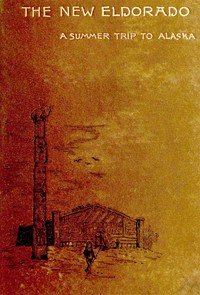
The New Eldorado: A Summer Journey to Alaska — Themes and Context
Edition facts
Before opening The New Eldorado: A Summer Journey to Alaska — Themes and Context, the edition data offers a quick orientation: 95,021 words, 6 hr 54 min estimated reading time, and 26 detected text sections.
The text analysis averages about 22.9 words per sentence, while the detected sections provide another way to judge how the source is divided.
Project Gutenberg metadata also associates the work with “West (U.S.) -- Description and travel,” connecting these edition facts with the source record’s subject description.
Calculated from edition completeness, EPUB availability, text structure and catalogue metadata. Not a user rating.
How this score is calculated
- Description quality20 pts
- Title & short description10 pts
- Source metadata20 pts
- Text length15 pts
- Chapters / structure15 pts
- EPUB file integrity20 pts
Total of 100 points, scaled to a 2.5-5.0 range. Editions with an empty description or a missing EPUB file are not scored.
Read the Text
Itinerary.—St. Paul.—The Northern Pacific Railroad.— Progress.—Luxurious Traveling.—Riding on a Locomotive.— Night Experiences.—Prairie Scenes.—Immense Grain-Fields.— The Badlands.—Climbing the Rocky Mountains.—Cinnabar.—The Yellowstone Park.—An Accumulation of Wonders.—The Famous Hot Springs Terrace.—How Formed.—As seen by Moonlight 1
Nature in Poetic Moods.—Is there Lurking Danger?—A Sanitarium.—The Liberty Cap.—The Giant’s Thumb.—Singular Caves.—Falls of the Gardiner River.—In the Saddle.—Grand Cañon of the Yellowstone.—Far-Reaching Antiquity.—Obsidian Cliffs.—A Road of Glass.—Beaver Lake.—Animal Builders.— Aborigines of the Park.—The Sheep-Eaters.—The Shoshones and other Tribes 20
Norris Geyser Basin.—Fire beneath the Surface.—A Guide’s Ideas.—The Curious Paint Pot Basin.—Lower Geyser Basin.— Boiling Springs of Many Colors.—Mountain Lions at Play.— Midway Geyser Basin.—“Hell’s Half Acre.”—In the Midst of Wonderland.—“Old Faithful.”—Other Active Geysers.—Erratic Nature of these Remarkable Fountains 34
The Great Yellowstone Lake.—Myriads of Birds.—Solitary Beauty of the Lake.—The Flora of the Park.—Devastating Fires.—Wild Animals.—Grand Volcanic Centre.—Mountain Climbing and Wonderful Views.—A Story of Discovery.— Government Exploration of the Reservation.—Governor Washburn’s Expedition.—“For the Benefit of the People at Large Forever” 47
Westward Journey resumed.—Queen City of the Mountains.— Crossing the Rockies.—Butte City, the Great Mining Centre.—Montana.—The Red Men.—About the Aborigines.—The Cowboys of the West.—A Successful Hunter.—Emigrant Teams on the Prairies.—Immense Forests.—Puget Sound.—The Famous Stampede Tunnel.—Immigration 57
Mount Tacoma.—Terminus of the Northern Pacific Railroad.— Great Inland Sea.—City of Tacoma and its Marvelous Growth.—Coal Measures.—The Modoc Indians.—Embarking for Alaska.—The Rapidly Growing City of Seattle.—Tacoma with its Fifteen Glaciers.—Something about Port Townsend.—A Chance for Members of Alpine Clubs 73
Victoria, Vancouver’s Island.—Esquimalt.—Chinamen.— Remarkable Flora.—Suburbs of the Town.—Native Tribes.— Cossacks of the Sea.—Manners and Customs.—The Early Discoverer.—Sailing in the Inland Sea.—Excursionists.— Mount St. Elias.—Mount Fairweather.—A Mount Olympus.— Seymour Narrows.—Night on the Waters.—A Touch of the Pacific 84
Steamship Corona and her Passengers.—The New Eldorado.—The Greed for Gold.—Alaska the Synonym of Glacier Fields.— Vegetation of the Islands.—Aleutian Islands.—Attoo our most Westerly Possession.—Native Whalers.—Life on the Island of Attoo.—Unalaska.—Kodiak, former Capital of Russian America.—The Greek Church.—Whence the Natives originally came 109
Cook’s Inlet.—Manufacture of Quass.—Native Piety.—Mummies.— The North Coast.—Geographical Position.—Shallowness of Behring Sea.—Alaskan Peninsula.—Size of Alaska.—A “Terra Incognita.”—Reasons why Russia sold it to our Government.— The Price comparatively Nothing.—Rental of the Seal Islands.—Mr. Seward’s Purchase turns out to be a Bonanza 127
Territorial Acquisitions.—Population of Alaska.—Steady Commercial Growth.—Primeval Forests.—The Country teems with Animal Life.—A Mighty Reserve of Codfish.—Native Food.—Fur-Bearing Animals.—Islands of St. George and St. Paul.—Interesting Habits of the Fur-Seal.—The Breeding Season.—Their Natural Food.—Mammoth Size of the Bull Seals 143
Enormous Slaughter of Seals.—Manner of Killing.—Battles between the Bulls.—A Mythical Island.—The Seal as Food.— The Sea-Otter.—A Rare and Valuable Fur.—The Baby Sea-Otter.—Great Breeding-Place of Birds.—Banks of the Yukon River.—Fur-Bearing Land Animals.—Aggregate Value of the Trade.—Character of the Native Race 159
Climate of Alaska.—Ample Grass for Domestic Cattle.—Winter and Summer Seasons.—The Japanese Current.—Temperature in the Interior.—The Eskimos.—Their Customs.—Their Homes.— These Arctic Regions once Tropical.—The Mississippi of Alaska.—Placer Mines.—The Natives.—Strong Inclination for Intoxicants 173
Sailing Northward.—Chinese Labor.—Unexplored Islands.—The Alexander Archipelago.—Rich Virgin Soil.—Fish Cunning.— Myriads of Salmon.—Native Villages.—Reckless Habits.— Awkward Fashions and their Origin.—Tattooing Young Girls.— Peculiar Effect of Inland Passages.—Mountain Echoes.— Moonlight and Midnight on the Sea 186
The Alaskan’s Habit of Gambling.—Extraordinary Domestic Carvings.—Silver Bracelets.—Prevailing Superstitions.— Disposal of the Dead.—The Native “Potlatch.”—Cannibalism.— Ambitions of Preferment.—Human Sacrifices.—The Tribes slowly decreasing in Numbers.—Influence of the Women.— Witchcraft.—Fetich Worship.—The Native Canoes.—Eskimo Skin Boats 199
Still sailing Northward.—Multitudes of Water-Fowls.—Native Graveyards.—Curious Totem-Poles.—Tribal and Family Emblems.—Division of the Tribes.—Whence the Race came.—A Clew to their Origin.—The Northern Eskimos.—A Remarkable Museum of Aleutian Antiquities.—Jade Mountain.—The Art of Carving.—Long Days.—Aborigines of the Yukon Valley.—Their Customs 212
Fort Wrangel.—Plenty of Wild Game.—Natives do not care for Soldiers, but have a Wholesome Fear of Gunboats.—Mode of Trading.—Girls’ School and Home.—A Deadly Tragedy.—Native Jewelry and Carving.—No Totem-Poles for Sale.—Missionary Enterprises.—Progress in Educating Natives.—Various Denominations engaged in the Missionary Work 222
Schools in Alaska.—Natives Ambitious to learn.—Wild Flowers.—Native Grasses.—Boat Racing.—Avaricious Natives.— The Candle Fish.—Gold Mines Inland.—Chinese Gold-Diggers.— A Ledge of Garnets.—Belief in Omens.—More Schools required.—The Pestiferous Mosquito.—Mosquitoes and Bears.— Alaskan Fjords.—The Patterson Glacier 231
Norwegian Scenery.—Lonely Navigation.—The Marvels of Takou Inlet.—Hundreds of Icebergs.—Home of the Frost King.—More Gold Deposits.—Snowstorm among the Peaks.—Juneau the Metropolis of Alaska.—Auk and Takou Indians.—Manners and Customs.—Spartan Habits.—Disposal of Widows.—Duels.— Sacrificing Slaves.—Hideous Customs still prevail 246
Aboriginal Dwellings.—Mastodons in Alaska.—Few Old People alive.—Abundance of Rain.—The Wonderful Treadwell Gold Mine.—Largest Quartz Crushing Mill in the World.— Inexhaustible Riches.—Other Gold Mines.—The Great Davidson Glacier.—Pyramid Harbor.—Native Frauds.—The Chilcats.— Mammoth Bear.—Salmon Canneries 258
Glacier Bay.—More Ice Bays.—Majestic Front of the Muir Glacier.—The Bombardment of the Glacier.—One of the Grandest Sights in the World.—A Moving River of Ice.—The Natives.—Abundance of Fish.—Native Cooking.—Wild Berries.— Hoonish Tribe.—Copper Mines.—An Iron Mountain.—Coal Mines 275
Sailing Southward.—Sitka, Capital of Alaska.—Transfer of the Territory from Russia to America.—Site of the City.—The Old Castle.—Russian Habits.—A Haunted Chamber.—Russian Elegance and Hospitality.—The Old Greek Church.—Rainfall at Sitka.—The Japanese Current.—Abundance of Food.—Plenty of Vegetables.—A Fine Harbor 293
Contrast between American and Russian Sitka.—A Practical Missionary.—The Sitka Industrial School.—Gold Mines on the Island.—Environs of the Town.—Future Prosperity of the Country.—Hot Springs.—Native Religious Ideas.—A Natural Taste for Music.—A Native Brass Band.—Final View of the Capital 304
The Return Voyage.—Prince of Wales Island.—Peculiar Effects.—Island and Ocean Voyages contrasted.—Labyrinth of Verdant Islands.—Flora of the North.—Political Condition of Alaska.—Return to Victoria.—What Clothing to wear on the Journey North.—City of Vancouver.—Scenes in British Columbia.—Through the Mountain Ranges 321
In the Heart of the Rocky Mountains.—Struggle in a Thunder-Storm.—Grand Scenery.—Snow-Capped Mountains and Glaciers.—Banff Hot Springs.—The Canadian Park.—Eastern Gate of the Rockies.—Calgary.—Natural Gas.—Cree and Blackfeet Indians.—Regina.—Farming on a Big Scale.—Port Arthur.—North Side of Lake Superior.—A Midsummer Night’s Dream 338
------------------------------------------------------------------------
Itinerary.—St. Paul.—The Northern Pacific Railroad.—Progress.—Luxurious Traveling.—Riding on a Locomotive.—Night Experiences.—Prairie Scenes.— Immense Grain-Fields.—The Badlands.—Climbing the Rocky Mountains.— Cinnabar.—The Yellowstone Park.—An Accumulation of Wonders.—The Famous Hot Springs Terrace.—How Formed.—As Seen by Moonlight.
A journey from Massachusetts to Alaska was a serious undertaking a few years ago. It involved great personal risk, considerable expense, and many long months of weary travel; but it is now considered scarcely more than a holiday excursion, a good share of which may be denominated a marine picnic. That an important country, so easily accessible, should remain comparatively unexplored seems singular in the nineteenth century, especially when its great mineral wealth and natural attractions are freely admitted. The trip to Sitka, the capital of the Territory, and back is easily accomplished in three months, affording also ample time to visit the principal points of interest on the route, including the marvels of the Yellowstone National Park, in Wyoming, which is not only not surpassed in grandeur and beauty by any scenery on the continent, but in fact has no parallel on the globe. The traveler also naturally pauses on his way to examine at least one of the great mining centres of this gold-producing country, such as Butte, the “Silver City” of Montana, where he may behold scenes eclipsing in affluence the fabulous story of Midas. The plan adopted by the author, as herein detailed, was to make the westward journey by the Northern Pacific Railroad to Tacoma, on Puget Sound, where the remarkable inland sea voyage begins, thence sailing north to Pyramid Harbor and Glacier Bay, stopping as usual at the intermediate places of interest.
On the homeward passage, to vary the journey and to enjoy the wild scenery of British Columbia, Alberta, Assiniboia, and Manitoba, he left the steamer at Vancouver, returning by the Canadian Pacific Railway, which presents to the lover of nature such famous scenic advantages.
The journey westward seems practically to begin when the traveler reaches St. Paul, the capital of Minnesota, by way of Chicago, as here he strikes the trunk line of the Northern Pacific Railroad, which has an exclusive and unbroken track thence to Tacoma, a distance of nearly two thousand miles, the whole of which is covered with novelty and interest.
We will not pause to fully describe St. Paul, that youthful city of marvelous growth, promise, and beauty, with her mammoth business edifices of stone and brick, her palatial private residences, and her charming boulevards. The most casual visitor is eloquent upon these themes, as well as regarding the open-handed hospitality of her two hundred thousand inhabitants. Three iron bridges span the Mississippi at St. Paul, one of which is nearly three thousand feet long, supported upon arches two hundred and fifty feet in span, and having a roadway elevated two hundred feet above the water.
St. Paul is situated upon a series of terraces rising from the left bank of the Mississippi River, its site being both commanding and picturesque. Thus built at the head of navigation on a great waterway, it naturally commands a trade of no circumscribed character, besides enjoying the prestige of being the State capital.
Were it not for the unlimited facilities of transportation afforded by the grand and beneficent railroad enterprise embraced in the Northern Pacific system, the development of the vast and fertile country which lies between Lake Superior and the Pacific Ocean would have been delayed for half a century or more. It should be remembered that so late as 1850 there was not one mile of railroad in existence west of the Mississippi River. In 1836 there were, at most, but a thousand miles in operation on the entire American continent. This is an epoch of progress. Japan is traversed by railways, even China has caught the contagion, and is now building roads for the use of the iron horse in more than one direction within that ancient and widespread empire, while Russia and India are “gridironed” with rails.
It was remarked in a congressional speech in the year 1847 that the Rocky Mountains would be the limit of railroad enterprise across our continent; that the barrier presented by these huge elevations and the extensive “desert tract” beyond them must certainly prevent the development of the Pacific States.
No land on the globe produces such remarkable cereal crops as this very prairie soil is doing each successive year, not only supplying our own rapidly increasing population with the stuff of life, but also feeding the less fortunate millions of Europe, where excessive labor and costly enrichment must make up the deficit arising from an exhausted soil and circumscribed area. The reader who follows these pages will not fail to see how liable legislators are to be mistaken in their predictions, and how apt events are to transcend the weak judgment of the confident and inexperienced declaimer. Even that Titan statesman, Daniel Webster, put himself on record in the United States Senate, while speaking against a proposition to establish a mail route through a portion of the western country, as follows: “What do we want with this vast, worthless area— this region of savages and wild beasts, of deserts of shifting sands and whirlwinds of dust, of cactus and prairie dogs? To what use could we ever hope to put these great deserts or those endless mountain ranges, impenetrable, and covered to their very base with eternal snow? What can we ever hope to do with the western coast,—a coast of three thousand miles, rock-bound, cheerless, uninviting, and not a harbor on it? What use have we for this country?”
In crossing the continent by the route we have chosen, one passes through a country whose grand scenic charms can hardly be exaggerated, in describing which superlatives only will apply, and whose agricultural advantages, natural resources, and mineral wealth are probably unequaled in the known world. We are taken through the productive wheat-fields of Minnesota and Dakota, among the gold and silver bearing hills of Idaho and Montana, into the prolific, garden-like valleys of Washington, whose lovely hopfields rival the gorgeous display of Kent in England, and whose abundant supply of coal and iron is only second to that of Pennsylvania.
The State has been, and may well be, denominated the Eden of the North Pacific.
On our way we are constantly meeting immense freight trains, laden with grain, flour, cattle, and other merchandise, bound for the Atlantic coast; long strings of coal cars, winding snake-like round sharp curves, and creeping up steep grades; passenger vans crowded with animated, intelligent people, all together testifying to the great and growing traffic of the West and Northwest. We pass scores of lofty grain elevators, high piles of lumber, and miles of various kinds of merchandise prepared for, and awaiting, shipment eastward, all of which evinces a local capacity for production far beyond our computation. How marvelous is the change from the conditions existing in this region a few years since, when millions of buffaloes roamed unmolested over these plains, valleys, and hills from Texas to Manitoba! The skeletons of these herds still sprinkle the prairies, bleached by the summer sun and crumbled by the winter’s frost. Hundreds of carloads are annually shipped eastward to the factories which manufacture fertilizers.
As we speed on our western journey day and night, gliding through long tunnels and deep rock cuttings, over airy trestles, immense embankments, bridges, and viaducts, representing the skillful accomplishments of modern engineering, we carry along with us the domestic conveniences of home. The train, in fact, becomes our hotel for the time being, where we bathe, eat, sleep, and enjoy the passing scenery seated in luxuriously upholstered easy-chairs, which at night are ingeniously transformed as if by magic into soft and inviting beds. The elegance and comfort of these parlor, dining, and sleeping cars is calculated to make traveling what it has in a measure become, an inviting luxury. The miraculous cap of Fortunatus would seem to have been pressed into our service. So thoroughly perfected is the transcontinental railroad system that it is quite possible to enter the cars in an Atlantic city, say at Boston or New York, and not leave the train until five or six days have expired, when the objective point on the Pacific coast is reached.
While passing through deep gorges at night, or creeping over a mountain top, the effect from one’s seat in the cars is weird and curious, especially when the winding track makes long curves in the train, so that the panting iron horse is seen from the rear, all ablaze and emitting dense clouds of smoke. The snow-tipped peaks on one side and the threatening gulch of unknown depth on the other assume a mantle of soft, gauze-like texture in the clear moonlight. At times one half believes this rails are laid upon the tree-tops, the branches of which loom up so close to us. Away in the valley, two thousand feet and more below our level, a rippling stream sparkles in the silvery light while on its way to swell some larger watercourse which drains the rocky hills. Looking far across the valley we try to make out the distant mountains, but only dim phantoms of gigantic size are seen, gliding stealthily away in the darkness.
We make interest with the conductor and engineer of the train for a special purpose. We are in search of a new sensation, to wit, such as may be derived from a night-ride on the engine, where one can see all the engineer sees, which is indeed little enough. The headlight of the locomotive throws its rays dimly on the darkness for a few rods in advance of the train. But what does that amount to, so far as being able to avoid danger? That brief space is passed in a second of time, and it is impossible to see what is beyond. The faithful engineer stands with both hands upon the machinery, one with which to instantly apply the brakes, the other to shut off the steam if danger shows itself ahead. That is all he can do. What a boisterous, asthmatic monster it is that drags the long train through the darkness at the rate of a mile in two minutes! How its hot breath belches forth, and how it springs and leaps over the iron track, fed incessantly with fresh fuel by the stoker! To one not accustomed to the oscillating motion, it is nearly impossible to keep his footing, much more difficult than on board of a pitching or rolling ship at sea. The motion is short, quick, and incessant. Black,— black as Erebus; how venturesome it seems to dash into such darkness! What a tempting of fate! Yet how few accidents, comparatively, occur! “The law of averages is what we calculate upon,” said the engineer of No. —; “about so many people will be killed annually out of a given number of railroad travelers. We take all reasonable precautions to prevent accidents, but there are thousands of exigencies beyond our control.” If any one proposes to you, gentle reader, to indulge in a night-ride on a locomotive, take our advice, and don’t do it.
One does not linger in bed when passing through a country famous for its scenery. The experienced traveler has learned that the opening hours of the day are those in which his best and clearest impressions are received. He therefore rises betimes to enjoy the cool, dewy freshness of the morning. Now and again a prairie-owl is seen groping its winged way to shelter from the increasing light. He is sure to see plenty of coyotes, gray wolves, and graceful antelopes on the rolling prairies, each of these animals exhibiting in some special and interesting manner its natural proclivities. The prairie-dog nervously diving into and leaping out of its little prairie mound; the wolf bravely facing and glaring at the passing train, though careful to keep at a wholesome distance; and the antelopes in small herds hastening away by graceful bounds over the nearest hills, far too pretty and far too ornamental to shoot, suggesting in form and movements that most picturesque of wild animals, the Tyrolean chamois.
Minnesota presents to the eye of the traveler a grand and impressive country in the form of rolling prairies, diversified by lakes,—of which there are said to be ten thousand in the State,—forests, and inviting valleys, the latter particularly adapted for raising wheat and for dairy farming. Vast fields of ripening cereals are seen stretching for miles on either side of the railroad, without a fence to break their uniformity. This State possesses among other advantages that of a climate particularly dry, invigorating, and healthful. Four hundred miles of our route is through Northern Dakota, where the farming lands are easily tilled, well watered, and wonderfully prolific in crops. The choicest wheat grown in America, known as hard spring wheat, comes from this section, which has been called “the granary of the world.” The gigantic scale on which wheat-raising is here conducted would seem incredible if faithfully described to an old-time New England farmer. The improvement which has been made in machinery connected with sowing, reaping, harvesting, and threshing grain enables one man to do as much in this western country as a dozen men could accomplish twenty-five or thirty years ago. There are wheat farms here embracing twenty thousand acres each, where economy in labor is of the utmost importance, and where the employees are so numerous as to be kept under semi-military organization. The author has seen the big grain-fields of Russian Poland in their prime, but they are as nothing when compared with those of Northern Dakota, nor are the farming facilities which are generally employed throughout Europe nearly equal to those of this country.
Ballou opens his account of an Alaskan summer journey not with his own impressions but with a lengthy quotation from Ivan Petroff, a U.S. government agent, who claims the Yukon River discharges more water than the Mississippi. This early reliance on official testimony sets the tone for a work that constantly negotiates between firsthand travel narrative and secondhand reportage. Ballou immediately qualifies Petroff's assertion, noting he is “a little inclined to question the accuracy of his estimate,” establishing a critical stance that recurs throughout the text.
The Yukon as a Contested Measure
The excerpt’s extended treatment of the Yukon River reveals how Ballou uses physical geography as a stage for debating reliability. He cites Petroff’s confident claim about the river’s volume, then undercuts it with a hedge: “This writer does not seem to us given to exaggeration, but still we are a little inclined to question.” The passage then shifts into a detailed, almost encyclopedic description of the Yukon’s length, width, and navigability, drawing on multiple unnamed explorers. Ballou’s voice here is that of a compiler, weaving official data with his own cautious commentary. The river becomes a symbol of the unknown territory—vast, partially explored, and subject to competing claims. By foregrounding a dispute over measurement, Ballou signals that his book will not simply celebrate Alaska’s wonders but will also interrogate the sources that describe them.
Resources and Their Obstacles
Ballou catalogs Alaska’s mineral and biological wealth with a booster’s enthusiasm: gold, silver, copper, coal, fur-bearing animals, and abundant salmon. Yet he immediately tempers this with practical obstacles. Placer gold mines yielded “nearly eighty dollars per day to each man,” but the remoteness and long winters pose challenges that “will one of these days be overcome by the erection of suitable shelter.” The conditional “will” and the vague timeframe reveal a tension between promotional optimism and realistic assessment. Similarly, he notes that the Yukon’s banks are “rich in fur-bearing animals” and its waters “stocked with an abundance of fish,” but the description remains generic, lacking specific observations from his own journey. The catalog of resources reads like a prospectus, not a traveler’s log, suggesting Ballou’s reliance on compiled data rather than personal discovery.
Native Peoples Through a Civilizational Lens
Ballou’s treatment of Alaska’s indigenous inhabitants is filtered through a hierarchical, civilizational framework. He contrasts “industrious and provident” inland tribes who “supply the whites with meat and fish” with coastal tribes who “care little for work or wages until they are driven by necessity.” The generalization is sweeping: “savage races have little idea of thrift, and like the wild animals are aroused to action only by the demands of hunger.” This passage, drawn from the excerpt, exemplifies the period’s racial stereotypes. Notably, Ballou offers no specific encounters or named individuals; the natives remain a collective, observed from a distance. The comparison to “wild animals” reduces complex societies to a single, derogatory trait. Readers should note that this perspective is characteristic of late-19th-century travel writing and reflects the author’s cultural biases rather than ethnographic accuracy.
Ballou’s narrative oscillates between personal travelogue and digested official reports, a hybrid form that invites readers to consider how knowledge of a frontier region was constructed in the 1890s. The excerpts suggest that the book is as much about the process of gathering information—through government agents, explorers, and hearsay—as about Alaska itself. Readers attentive to Ballou’s sources and his occasional skepticism will find a layered text that both promotes and questions the promise of the “New Eldorado.”
Reading about Ballou wrestling with Alaska’s promise and its costs reminded me of the quiet unease I felt tracing an old road’s faded grandeur. Sometimes a journey’s real weight isn’t what’s found, but what’s left unresolved. That same lingering ache lives in The Great North Road, the Old Mail Road to Scotland: York to Edinburgh — A Closer Reading, and I keep thinking about it.
Matthew Robinson
2 weeks agoScarlett Hall
3 weeks agoAmelia Taylor
2 weeks ago-
Mathew Chen - 1 month ago
{'rating': 3, 'text': "An interesting historical account of a summer trip to Alaska, offering valuable insights into the region's past. The descriptions are detailed and the sense of adventure is palpable. However, the narrative can get a bit dry in places, and the pacing is uneven. Still, it's a worthwhile read for those interested in the period."} -
Darrell Smith - 1 month ago
{'rating': 5, 'text': "A captivating travelogue that vividly captures the raw beauty and promise of Alaska during the gold rush era. The author's prose is both poetic and informative, painting a picture of majestic landscapes and the adventurous spirit of the time. Reading this feels like embarking on the journey yourself. A must-read for history buffs and armchair travelers alike."} -
Carlos Turner - 2 weeks ago
{'rating': 1, 'text': "Disappointing and tedious. The book is more of a catalog of observations than a compelling story. The writing style feels dated and rambling, with little to engage the modern reader. The author's perspective is also clearly of its time, with some colonialist attitudes that are hard to stomach. I struggled to finish and cannot recommend it."}
Before you leave, reflect on the book
Use these questions to collect your thoughts before moving on.

Joseph Harris
3 weeks ago