1

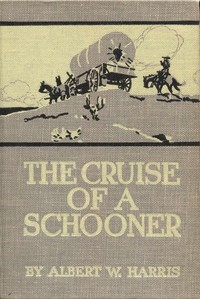
The Cruise of a Schooner — Story, Setting & Ideas
(6 User reviews)
1494
Project Gutenberg
2013
Not confirmed
West (U.S.) -- Description and travel; Harris, Albert W. (Albert Wadsworth), 1867-1958 -- Travel -- West (U.S.)
Readers of public-domain and historical texts
Project Gutenberg digital edition
en
Edition facts
Words
57,261
Reading time
249 min
Text sections
7
The catalog record for The Cruise of a Schooner — Story, Setting & Ideas provides practical reading context through 57,261 words, 4 hr 9 min estimated reading time, and 7 detected text sections.
The text analysis averages about 24.3 words per sentence, while the detected sections provide another way to judge how the source is divided.
Project Gutenberg metadata also associates the work with “West (U.S.) -- Description and travel,” connecting these edition facts with the source record’s subject description.
Source:
Project Gutenberg record #42351
Albert W. Harris recounts a 1911 overland journey from the Pacific Ocean eastward, blending a personal narrative of realizing childhood 'air castles' with detailed accounts of travel challenges across the American West.
Editorial Edition Score
4.7/5
★★★★★
★★★★★
Calculated from edition completeness, EPUB availability, text structure and catalogue metadata. Not a user rating.
How this score is calculated
- Description quality20 pts
- Title & short description10 pts
- Source metadata20 pts
- Text length15 pts
- Chapters / structure15 pts
- EPUB file integrity20 pts
Total of 100 points, scaled to a 2.5-5.0 range. Editions with an empty description or a missing EPUB file are not scored.
Edition quality
Read the Text
eria was merely a handful of people; Victorville had a few more and seemed quite prosperous. It is on the banks of the Mojave River, which at this point is fully a hundred yards wide, but shallow and muddy, with a considerable fringe of trees in places along the banks. At Daggett, however, the river had about disappeared, and a few miles farther east was entirely lost in the sand.
Here at Daggett we decided to rest our horses and take stock, so to speak. We found among our luggage a tent and two cots which we apparently would have no need of until we reached Grand Junction, Colorado, where we expected to have an addition of four to our party, so we decided to send them on to this point by freight and thus lighten our load by seventy-five pounds.
Having put our horses and wagon in a corral, we began to make inquiries regarding the road to Las Vegas, Nevada, but could get no definite information. We were told we could not cross the desert directly, but would have to go around the south end. This meant going in a circle and, as the line we had drawn on the map went straight, we declined to go around, and were conferring with some old prospectors on the feasibility of crossing the desert when we heard of a man who had just come in from Las Vegas. We did not bother to make any more inquiries then and decided to interview the man from Las Vegas the first thing in the morning. I slept in the wagon at night, but being in town the Doctor and Bob thought it would be a good idea to try beds, to see if they were softer than the sand, but the next morning they pronounced them not much of an improvement.
We found the man we were looking for shortly after breakfast at the corral, where we had left our horses. He told us his name was Knowles. He certainly looked as if he had been through something strenuous. His eyes were bloodshot and he was a nervous wreck. He said he had come from Las Vegas and had driven across _en route_ to Los Angeles. He had a good team, a light farm wagon, but nothing in it save a water barrel, some bedding, and a dog. He seemed so mixed in his dates that it was hard to get any reliable information from him. He said it was just an accident he had got through. He had been lost and stuck in the sand and forced to abandon his load, when by good luck he came to the Salt Lake Railroad. Here the sand was so deep that his horses could not pull the empty wagon, so he drove up to the railroad track, and, as there were no trains running (the road having been washed out for eighty miles above Las Vegas early in the Spring), he drove on the track until he reached Daggett, a distance of about sixty miles. He did not dare to leave the railroad for fear that he would get lost, and he found water at the little deserted section houses he passed every twenty or thirty miles. He said that with a big wagon and load we could not get through, and advised us not to try.
We concluded that if he had got through alone we could go through, even with a heavier load, and in return for the questionable information he had given us we told him how to get to Los Angeles, and assured him that his troubles were over. He gave as much heed to our directions as we gave to his, as we afterwards found out, but we parted without disclosing our incredulity to each other.
The Doctor and I rode a freight train down to Barstow to get our mail and a few provisions that we could not get at Daggett, and while there who should we see driving up the main street but Knowles, our desert traveller! We hailed him and asked him why he had come to Barstow. He seemed quite ashamed at being discovered, but reluctantly admitted that he had intended heeding our instructions and had followed the road along the railroad track as directed, until he came to the left-hand fork which went south over the desert hills to Victor. He could not, however, trust himself to leave the railroad track for fear of getting lost again and perhaps running out of water. He said that he knew the railroad went to Victor and he had decided finally to follow it even if it was a longer route. We saw our word wouldn’t go so we called some natives into the conference, and they assured him we were right. They told him he could not follow the railroad as there was no wagon bridge across the river except at Victor, and that even if he could get across here at Barstow he would have a long weary route ahead of him, and would not reach Victor for at least two days. So he reluctantly turned about and went back to the south fork in the road, and we presume he went that way as we never saw him again, but it must have taken a great deal of fortitude on his part. Lose a man in the desert and, I imagine, he won’t want to try another stretch of desert in the same week, especially alone; so we did not blame him very much for insisting on following the railroad track.
We got back to Daggett shortly after noon on a passenger train and hunted up the old prospectors again. They were the sort who had always been in the desert and knew all about it, to hear them tell it, but for the past twenty years had probably sat around the corner store and saloon and told stories to tenderfeet about its mysteries. When we told them of Knowles’ experience and asked their advice they looked very solemn, and each in turn took refuge behind the other by asking him which of the many routes we ought to take, until they had gone the rounds and got back to the first old party again, who in desperation referred us to some one else who wasn’t there.
This was so amusing that we forgot we were wasting time and went prospecting around town for the man who knew, and finally located him and told our story. He assured us Knowles had taken the wrong road; he should have stayed away from the railroad because it went through the worst sand and had no feed anywhere along the line. He then drew a diagram showing how we should go east through the Mojave Canyon, then northeast and skirt the foot of the Soda Mountains to a spring on Soda Lake, and then follow the old prospectors’ trail east to Good Springs, from where we could follow the railroad to Las Vegas, Nevada. He said we could not lose the trail and that it had several springs and water holes, so that we could get through safely. He wound up, however, by saying that he had not been over this trail for ten or fifteen years, but that it was a good trail the last time he went over it.
This information, while not especially reassuring, we thought sufficient to at least make a start, as we would no doubt find some one on the trail who could put us right if we went wrong, so at 3:30 P. M. we hitched up and started on a leg of our journey that came near being our Waterloo.
The Real Thing in Deserts
It is almost impossible to describe the country we found ourselves in as we started out from Daggett on the afternoon of May twentieth, because, to use a home-made expression, “it does not sound at all as it looks.” We are to follow the Mojave River Valley until we get through the Mojave Canyon, then go north around the base of the Soda Mountains, etc., as per directions. Now the above sounds easy. It makes one think of water running down hill, and with water the mountains should have trees among the rocks, as a canyon suggests a rocky country.
The real picture, however, which presented itself to us that afternoon was a desolate, wind-swept country; the valley looked like a wide rolling stretch of desert, flanked by bare hills, with no sign of a river. It was so cold that even with our coats on we were none too comfortable. The wind blew so hard we had to take the canvas off the wagon, and after going about ten miles we made camp for the night at a place where the trail took us close to a deserted railroad section house, which had a well. These railroad wells are really cisterns, but instead of being built to catch rain water, are designed to hold the water that the Salt Lake R. R. hauls in tank cars and distributes regularly to the section men. These section houses were located about twenty or thirty miles apart and about every other one had a well. The others had a few barrels, so, as we afterwards found out, if one came to the railroad track he knew that by following it fifteen or twenty miles he would probably find a deserted section house with a few pails of water left in a barrel, or perhaps a well with a few barrels of water, and possibly a section crew that had not been laid off. In the latter case you could find out how far it was to the next water. The water in the railroad wells was very good, but where the company found enough water to fill the big tank cars they evidently sent over the line when the road was running, no one seemed to know. We concluded, however, that it came from Kelso, California, or Las Vegas, Nevada, where we found out later they had water tanks and plenty of good water. We had met no one since leaving Daggett who could tell us about the trail ahead, but with plenty of water we felt cheerful enough and expected to make a good many miles the next day, so turned in to get an early start.
Saturday morning, May twenty-first, we found we had lost our canteen. It was so cold and windy the afternoon before that we hadn’t needed the canteen and in taking the sheet off the wagon we must have pulled it off, but where and when we didn’t know. Having plenty of water to start with we concluded we could pick up another canteen or improvise one, so we did not go back far to look for it, but started out to get over as much ground as possible.
There was no air stirring; it warmed up early and later got hot. The sand made it hard pulling and finally, at 11 A. M., we reached another deserted section house. There was a well and bucket, and, while there was no shade and the heat was intense, we managed to keep fairly comfortable by lying under the wagon and recalling how cool it had been the day before. Our dog, Tuck, seemed to feel the heat more than we did, or the horses, but it was principally because we had hard work keeping him in the wagon. If he saw anything move, from a coyote to a lizard, he would jump out of the wagon and undertake to catch it. The lizards would disappear in the sand and the coyotes in the distance, and Tuck would be hot for an hour or two afterward.
About 2 P. M. we started on again, this time driving spike, as the sand was getting harder to pull through and it took all three horses to do it. By evening we had reached what is called the canyon of the Mojave River. Here we camped in the bed of the river, which at this place was a mere rivulet. The river bed, however, was about two hundred yards wide, full of gravel and stones, with occasionally a big boulder. Willows grew in patches on the banks, and here and there a cottonwood. On each side the bare mountains had edged up to the bank, and we had a shut-in feeling. The river, however, small as it was at this time, no doubt rushed through here at times, carrying a large volume of water out into the desert beyond.
Having picked out a place to camp, where there were no rocks, we proceeded to get supper, while Tuck raced up and down in what little water there was in the river and had a glorious time. We were tired with the heat and sand, and so were the horses, but after supper we decided to take a swim; at least that is what we said, but the reader can imagine we did not swim much in a stream four feet wide and three inches deep. It was quite a grotesque sight to see three men trying to take a bath in such a stream by the light of the moon. In fact we laughed a great deal ourselves, but we were so long at it, and it grew cold so fast, that we were shivering before we got back to the wagon. Such is the difference in temperature between night and day in this country.
Sunday, the twenty-second, we started early so as to get through the canyon and out into the open desert before it should get too hot. It was a hard drive of six miles over rocks and through sand down the river bed, which, very soon after starting, we found had lost even the small stream of water which had been so welcome at our camp site. The walls of the canyon became quite rocky and in spots sheer walls of stone, and in the narrowest place we found the railroad track above us passing through tunnels and over bridges, as this canyon through which the river flows (when it does flow) is the only way the railroad could get through these mountains at this point. We supposed they were part of what is called the Soda Mountains.
At this point in the canyon we saw a section house and climbed up to see if they had any water. We found a man and his wife and daughter. They had only about half a barrel of water fit to drink, but allowed us what we wanted for that purpose. They also had two canteens, and after a parley sold us one. After our previous experience in losing two canteens, we were careful not to lose this one and luckily brought it all the way through. Besides being kind enough to let us have the canteen, they told us that the Company was now running a train each day between Las Vegas and Daggett, and that there was a tank car containing a little water on a spur track in the desert about five miles from there, so we started on much encouraged. We had a canteen and were only five miles from a tank car with water in it!
Within a mile we emerged from the canyon, the mountains receded to the north and south, and we surveyed a vast plain of sand. There was no sign of a trail, however, so we pushed out into the sand, which seemed to have no bottom. The wheels of the wagon, although having wide tires, sank to such a depth that at times we were “four spokes in the sand,” and a hundred yards was about as far as the horses could pull the wagon at a time. The Doctor and Bob walked to lighten the load, and it wasn’t very long before we began to realize that we were up against it hard. The heat was intense, and the sun on the white sand would have blinded us soon if we had not put on our smoked glasses.
After plodding along at a snail’s pace for an hour or two, the Doctor said, “Well, I can see our finish unless we get out of this pretty soon,” and Bob suggested that we turn back. To turn back, however, meant miles to water, and we had just sighted the tank car. It lay off south of us about a mile and, although we still had some water in our barrels, we needed more if we were to go back or forward, either one. It was cruel to ask the horses to pull the wagon even two miles farther than necessary, through heat and sand, so the Doctor and I volunteered to take two pails each and see if there really was any water in the car. It seemed foolish to expect to find water in that car out there in the burning sandy waste, and the nearer we came to it the more unreasonable it appeared. We did find water in it, however, and although it was hot, it was good water, and after filling our four pails we managed to get back to the wagon and add this much to our supply.
From here we were supposed to follow the trail north around the base of the Soda Mountains, but as yet there was no trail, so we had to decide on some plan at once. There seemed to be three things we might do: The first was to go back. This we refused to do. The second was to go south to the Salt Lake Railroad and follow it east. This was Knowles’ advice to us and, as we had declined to take it before, we stood pat. The third and only thing left for us to do was to go north, which we did, looking for the trail the old prospector told us was there somewhere, and which would take us around to a spring above Soda Lake.
So slow was our progress through the sand that we soon grew nervous over it. In fact, I think we all became somewhat alarmed over the situation. It was very hot and we seemed getting farther from anywhere, so that when we stopped for lunch and had not yet found any signs of a trail, we decided to make a “B” line for the mountains with the hope that we might at least find better going, if we didn’t find the trail.
Before starting, however, I decided to go over and climb the nearest foothill and see if I could see Soda Lake. It was probably only a mile, but I had to stop several times and lie down to get my head in the shade of a bush, of which there were quite a number growing in the sand near the mountains. Arriving at a small sand hill, I climbed up to where a bush was growing and lay down with my head under it, and surveyed the mountains ahead and the desert at the south, but no sign of a lake or trail did I see. Then I saw through a gap in the mountains a valley, with a lake in the centre and two tents on the bank. This, I concluded, was a mirage. I looked away and tried to assure myself that when I should look again the valley would be gone; but it was still there when I looked again, and I could see a trail winding down to it. I went to examine the trail, which was real enough, so I was sure I had seen Soda Lake, although it seemed to be in the wrong place. I immediately returned to the wagon to find I had been gone two hours and the boys were afraid I was overcome by the heat and were coming to look me up.
Cheered with my report of water and camps in sight, we all felt encouraged, and pushed the horses as fast as possible through the gap and down to the lake, where we found a man, a few chickens, a dog, and a mule. The man was raising vegetables. Just think of it, in a valley in the Soda Mountains! The lake was not Soda Lake after all, but Lake Crucero. He told us Soda Lake was dry, that it was seven miles east, and that there was no way to get there except through the deep sand, and that when we got there we would be nowhere.
The opening pages of The Cruise of a Schooner establish a distinctive narrative voice: Albert W. Harris writes in a self-deprecating, conversational tone, describing his youthful 'queer notions' and 'air castles' about owning a pony and a ranch. He admits that these dreams were dismissed by others, yet he eventually found himself possessing 'the farm and the ponies' he had imagined. This personal, reflective preface sets the stage for a travelogue that is as much about the fulfillment of long-held aspirations as it is about the physical journey itself.
From Air Castles to Overland Reality
Harris frames his narrative around the concept of 'air castles'—dreams that gradually materialize. He recounts how, after acquiring the farm and ponies of his boyhood fantasies, he began planning an overland trip to California. Interestingly, when he finally started, he 'started from the Pacific Ocean and drove east,' a reversal of the expected westward trajectory. This inversion hints at a deliberate, perhaps playful, approach to his journey. The preface reveals a man who is both reflective and determined, acknowledging the skepticism of 'ordinary mortals' while quietly proving them wrong. The reader is thus introduced to a narrator who values persistence and self-deprecating humor over boastfulness.
Stuck in the Wash: A Lesson in Humility
One of the most vivid excerpts describes a moment of misjudgment at a desert wash. Harris admits he 'enjoyed seeing me stuck' and recounts how he ignored his companion Bob's lead, driving his team into a difficult stream crossing. The passage is rich with specific details: the horses losing their footing on a 'slippery bank,' the need to lighten the load by carrying items uphill, and the eventual use of a borrowed shovel from the station at Thompson. The narrative pace slows to match the laborious process of extricating the wagon, and Harris’s willingness to recount his own error—'admitting I was stuck and needed help'—adds a layer of authenticity. The episode underscores the constant negotiation between human ambition and the unforgiving terrain.
Rain, Mud, and Improvised Bridges
Another excerpt captures a day of relentless rain, where the party wakes to find horses standing in a 'miniature lake' and the wagon leaking onto the Doctor’s head. Harris describes a cold breakfast, a noon meal cooked over a kerosene stove inside the wagon, and a late start at 2 P.M. The roads become 'very heavy and slippery,' forcing the group to build a bridge from railroad ties and later cut down a bank to cross a wash. The need for a shovel becomes critical, leading Harris to ride Dixie two miles to Thompson to borrow one. The day’s progress amounts to only six miles, half spent in the wagon during rain and the rest in digging and bridge-building. This passage highlights the slow, gritty reality of overland travel, where even small distances demand ingenuity and physical effort.
Readers approaching The Cruise of a Schooner should expect a narrative that moves between reflective passages and detailed, obstacle-driven episodes. Harris’s voice is that of a seasoned traveler who is not afraid to admit mistakes, and his account rewards attention to the small, practical decisions that define a journey. The book offers a firsthand perspective on early twentieth-century travel across the West, grounded in the author’s personal history and his evolving relationship with the landscapes he crosses.
Reading about Albert W. Harris turning his childhood fantasies into a real, dusty overland trek reminded me of how a journey’s soul is often the quiet anticipation before the road. It made me think of The Great North Road, the Old Mail Road to Scotland: York to Edinburgh — A Closer Reading, where the slow, deliberate travel along an old post road feels like walking through a remembered story, each mile a soft echo of a past purpose.
There are no comments for this eBook.
Reader reflection
Before you leave, reflect on the book
Use these questions to collect your thoughts before moving on.
Your progress
0
/
10
2
Did this book hold your interest?
3
How likely are you to recommend this book?
4
How much effort did this book require?
5
How personally connected did you feel to the book?
6
What did you appreciate most?
7
How useful were the ideas in this book?
8
Was the book what you thought it would be?
9
What changed or sharpened your thinking?
10




Carter Green
1 month ago