About 253 minutes
The Old Road — Edition Insights
Geography
58,115 recorded words. 4 minutes difference from this book's estimate.
View Gutenberg source #40759
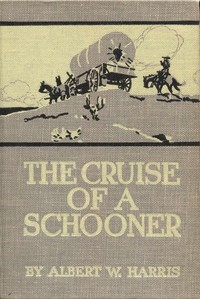
The catalog record for The Cruise of a Schooner — Story, Setting & Ideas provides practical reading context through 57,261 words, 4 hr 9 min estimated reading time, and 7 detected text sections.
The text analysis averages about 24.3 words per sentence, while the detected sections provide another way to judge how the source is divided.
Project Gutenberg metadata also associates the work with “West (U.S.) -- Description and travel,” connecting these edition facts with the source record’s subject description.
Explore this collection
These alternatives are selected using recorded categories and estimated reading time.
About 253 minutes
Geography
58,115 recorded words. 4 minutes difference from this book's estimate.
View Gutenberg source #40759About 237 minutes
Geography
54,369 recorded words. 12 minutes difference from this book's estimate.
View Gutenberg source #42611About 234 minutes
Geography
53,611 recorded words. 15 minutes difference from this book's estimate.
View Gutenberg source #55920Search stored excerpts and compare books → Choose by your preferences →
Choices use stored catalog measurements. Estimates vary with reading speed. A shared category is a catalog label, not a claim that two books have the same argument or literary quality.
Search reads excerpt text stored with this catalog and links to its associated Gutenberg record. The connection is stored in the site database; this tool does not recheck that every excerpt is word-for-word identical to that external record. Excerpt search does not cover every chapter and does not verify historical publication dates.
Catalog snapshot checked: 2026-09-25. Coverage: 96 public books, 96 available source excerpts.
Calculated from edition completeness, EPUB availability, text structure and catalogue metadata. Not a user rating.
Total of 100 points, scaled to a 2.5-5.0 range. Editions with an empty description or a missing EPUB file are not scored.
Public-domain source text
The source text is kept in the dedicated reader, separate from this catalogue record and its commentary.
The opening pages of The Cruise of a Schooner establish a distinctive narrative voice: Albert W. Harris writes in a self-deprecating, conversational tone, describing his youthful 'queer notions' and 'air castles' about owning a pony and a ranch. He admits that these dreams were dismissed by others, yet he eventually found himself possessing 'the farm and the ponies' he had imagined. This personal, reflective preface sets the stage for a travelogue that is as much about the fulfillment of long-held aspirations as it is about the physical journey itself.
Harris frames his narrative around the concept of 'air castles'—dreams that gradually materialize. He recounts how, after acquiring the farm and ponies of his boyhood fantasies, he began planning an overland trip to California. Interestingly, when he finally started, he 'started from the Pacific Ocean and drove east,' a reversal of the expected westward trajectory. This inversion hints at a deliberate, perhaps playful, approach to his journey. The preface reveals a man who is both reflective and determined, acknowledging the skepticism of 'ordinary mortals' while quietly proving them wrong. The reader is thus introduced to a narrator who values persistence and self-deprecating humor over boastfulness.
One of the most vivid excerpts describes a moment of misjudgment at a desert wash. Harris admits he 'enjoyed seeing me stuck' and recounts how he ignored his companion Bob's lead, driving his team into a difficult stream crossing. The passage is rich with specific details: the horses losing their footing on a 'slippery bank,' the need to lighten the load by carrying items uphill, and the eventual use of a borrowed shovel from the station at Thompson. The narrative pace slows to match the laborious process of extricating the wagon, and Harris’s willingness to recount his own error—'admitting I was stuck and needed help'—adds a layer of authenticity. The episode underscores the constant negotiation between human ambition and the unforgiving terrain.
Another excerpt captures a day of relentless rain, where the party wakes to find horses standing in a 'miniature lake' and the wagon leaking onto the Doctor’s head. Harris describes a cold breakfast, a noon meal cooked over a kerosene stove inside the wagon, and a late start at 2 P.M. The roads become 'very heavy and slippery,' forcing the group to build a bridge from railroad ties and later cut down a bank to cross a wash. The need for a shovel becomes critical, leading Harris to ride Dixie two miles to Thompson to borrow one. The day’s progress amounts to only six miles, half spent in the wagon during rain and the rest in digging and bridge-building. This passage highlights the slow, gritty reality of overland travel, where even small distances demand ingenuity and physical effort.
Readers approaching The Cruise of a Schooner should expect a narrative that moves between reflective passages and detailed, obstacle-driven episodes. Harris’s voice is that of a seasoned traveler who is not afraid to admit mistakes, and his account rewards attention to the small, practical decisions that define a journey. The book offers a firsthand perspective on early twentieth-century travel across the West, grounded in the author’s personal history and his evolving relationship with the landscapes he crosses.
Reading about Albert W. Harris turning his childhood fantasies into a real, dusty overland trek reminded me of how a journey’s soul is often the quiet anticipation before the road. It made me think of The Great North Road, the Old Mail Road to Scotland: York to Edinburgh — A Closer Reading, where the slow, deliberate travel along an old post road feels like walking through a remembered story, each mile a soft echo of a past purpose.
Use these questions to collect your thoughts before moving on.