About 401 minutes
Paris Vistas — Text and Context
Geography
92,155 recorded words. 2 minutes difference from this book's estimate.
View Gutenberg source #40292
This digital edition of Castles and Chateaux of Old Navarre and the Basque Provinces — Reading Notes is described by source-level measurements including 92,640 words, 6 hr 43 min estimated reading time, and 16 detected text sections.
The text analysis averages about 26.5 words per sentence, while the detected sections provide another way to judge how the source is divided.
Project Gutenberg metadata also associates the work with “Castles -- France,” connecting these edition facts with the source record’s subject description.
Explore this collection
These alternatives are selected using recorded categories and estimated reading time.
About 401 minutes
Geography
92,155 recorded words. 2 minutes difference from this book's estimate.
View Gutenberg source #40292About 413 minutes
Geography
94,990 recorded words. 10 minutes difference from this book's estimate.
View Gutenberg source #39710About 414 minutes
Geography
95,021 recorded words. 11 minutes difference from this book's estimate.
View Gutenberg source #53158Search stored excerpts and compare books → Choose by your preferences →
Choices use stored catalog measurements. Estimates vary with reading speed. A shared category is a catalog label, not a claim that two books have the same argument or literary quality.
Search reads excerpt text stored with this catalog and links to its associated Gutenberg record. The connection is stored in the site database; this tool does not recheck that every excerpt is word-for-word identical to that external record. Excerpt search does not cover every chapter and does not verify historical publication dates.
Catalog snapshot checked: 2026-09-25. Coverage: 96 public books, 96 available source excerpts.
Calculated from edition completeness, EPUB availability, text structure and catalogue metadata. Not a user rating.
Total of 100 points, scaled to a 2.5-5.0 range. Editions with an empty description or a missing EPUB file are not scored.
Public-domain source text
The source text is kept in the dedicated reader, separate from this catalogue record and its commentary.
Francis Miltoun’s Castles and Chateaux of Old Navarre and the Basque Provinces (1907) opens with a frank admission: no account of life and historical monuments in the old French provinces can be confined within strict geographical limits. Instead, the book centers its interest around an “imaginary hub” radiating lines of historic and romantic interest—chiefly Henri de Navarre. The author’s method is not systematic topography but a meandering blend of architectural description, local anecdote, and personal travel narrative, often punctuated by the author’s own automobile misadventures in the Pyrenees.
The catalog subjects list “Castles — France” and “Pyrenees — Description and travel,” but the excerpts reveal that the book’s organizing figure is not a building but a person: Henri de Navarre. Miltoun calls him “the chief romantic and historical figure of all that part of France bounded on the south by the Pyrenean frontier of Spain.” The narrative traces his lineage through his mother, Jeanne d’Albret, and his upbringing at the ancestral château at Pau, where he supposedly acquired a training in chivalry second only to François I. This biographical thread provides a unifying device for a work that otherwise ranges across multiple provinces. The author does not claim to offer a complete biography; rather, Henri serves as a recurring reference point, linking disparate chateaux and regions through his life story. The excerpts include a dramatic scene where Catherine de’ Medici declares she will go to Nérac to conclude a treaty with “Reine Jeanne,” mother of Henri de Béarn, and that the marriage of Henri and Marguerite will follow. This suggests the book incorporates historical dialogue or tradition, though the author cautions that “tradition—or perhaps it is a fact” is often uncertain.
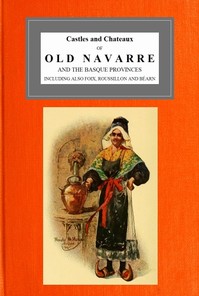
Miltoun devotes considerable space to the people of Béarn, offering a mix of received tradition and personal experience. He notes that tradition describes the Béarnais as “irascible and jealous,” but he finds no external evidence to support this, having found them “faithful, willing” helpers when his automobile got stuck in Pyrenean valleys. He contrasts the stereotype of knife-drawing vengeance with the fact that the préfet of the Basses-Pyrénées reports more legal business than ever, suggesting a law-abiding populace. The author also details peasant dress: a woollen head-dress “drawn down over the left ear in a most dégagé fashion,” a long blouse-like coat, and woollen breeches and gaiters in colors “anything you like and individual, but mostly brown or gray of those shades which were the progenitors of what we have come to know as khaki.” This attention to costume and character aligns with the travelogue genre but is not directly about castles; it reflects the book’s broader ethnographic interest, which the catalog subjects do not fully capture.
The excerpts include a striking detail about the Béarnais language: a patois composed of “Celtic, Latin and Spanish” elements, which Miltoun distinguishes from Breton or Basque as a “hybrid means of expression” rather than a true language. This linguistic observation is paired with a vignette about a Béarnais inn where the Prince de Conti saw a couplet chalked on the wall: “Je m’apuelle Robineau, / Et je bois mon vin sans eaux.” The prince added his own verse, and Miltoun comments that such “window-pane poetry” never soars but is “significant of the good living of past and present times in France.” These details—language, drinking habits, and improvised verse—illustrate the book’s tendency to wander from architectural description into social commentary. The catalog subject “Castles — France” gives no hint of these ethnographic and anecdotal digressions, which occupy a substantial portion of the excerpts. Readers expecting a focused architectural guide will find instead a discursive travel narrative that treats castles as one element among many in a regional portrait.
Miltoun’s work resists easy categorization: it is part architectural survey, part travel memoir, and part amateur ethnography. The catalog subjects emphasize castles and Pyrenean travel, but the excerpts show equal attention to regional character, costume, language, and historical anecdote. Readers will benefit from approaching the book as a period piece of early automobile tourism, where the author’s personal encounters and digressions are as central as the chateaux themselves. The illustrations by Blanche McManus, reproduced from paintings made on the spot, complement the text’s visual emphasis.
I sometimes think of the heather and grey stone of Navarre, and the quiet endurance of its old chateaux, when I recall that other book about a wilder, newer country. Both are records of human presence in vast, indifferent landscapes, though one whispers of centuries and the other of gold-rush mornings. The New Eldorado: A Summer Journey to Alaska — Themes and Context carries a similar loneliness between its lines.
Save your reaction, strongest insight, and memorable passage.