1


Studies in the South and West, with Comments on Canada — A Reader’s Guide
(12 User reviews)
1693
Project Gutenberg
2016
Not confirmed
United States -- Description and travel; Canada -- Description and travel
Readers of public-domain and historical texts
Project Gutenberg digital edition
en
Edition facts
Words
140,041
Reading time
609 min
Text sections
14
For Studies in the South and West, with Comments on Canada — A Reader’s Guide, the stored edition analysis reports 140,041 words, 10 hr 9 min estimated reading time, and 14 detected text sections.
The text analysis averages about 25.4 words per sentence, while the detected sections provide another way to judge how the source is divided.
Project Gutenberg metadata also associates the work with “United States -- Description and travel,” connecting these edition facts with the source record’s subject description.
Source:
Project Gutenberg record #52290
Warner's 1885-1887 travel essays examine post-Reconstruction South and expanding Midwest through specific observations of industry, race relations, and regional character, with a prefatory note emphasizing state dignity.
Editorial Edition Score
4.8/5
★★★★★
★★★★★
Calculated from edition completeness, EPUB availability, text structure and catalogue metadata. Not a user rating.
How this score is calculated
- Description quality20 pts
- Title & short description10 pts
- Source metadata20 pts
- Text length15 pts
- Chapters / structure15 pts
- EPUB file integrity20 pts
Total of 100 points, scaled to a 2.5-5.0 range. Editions with an empty description or a missing EPUB file are not scored.
Edition quality
Read the Text
South by reason of its foreign elements, more closely always in sympathy with Paris than with New York or Boston, was widely, in its social life, separated from its sisters. Indeed, in early days, before the slavery agitation, there was, owing to the heritage of English traditions, more in common between Boston and Charleston than between New Orleans and Charleston. And later, there was a marked social difference between towns and cities near together—as, for instance, between agricultural Lexington and commercial Louisville, in Kentucky.
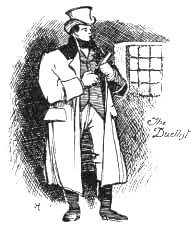
The historian who writes the social life of the Southern States will be embarrassed with romantic and picturesque material. Nowhere else in this levelling age will he find a community developing so much of the dramatic, so much splendor and such pathetic contrasts in the highest social cultivation, as in the plantation and city life of South Carolina. Already, in regarding it, it assumes an air of unreality, and vanishes in its strong lights and heavy shades like a dream of the chivalric age. An allusion to its character is sufficient for the purposes of this paper. Persons are still alive who saw the prodigal style of living and the reckless hospitality of the planters in those days, when in the Charleston and Sea Island mansions the guests constantly entertained were only outnumbered by the swarms of servants; when it was not incongruous and scarcely ostentatious that the courtly company, which had the fine and free manner of another age, should dine off gold and silver plate; and when all that wealth and luxury could suggest was lavished in a princely magnificence that was almost barbaric in its profusion. The young men were educated in England; the young women were reared like helpless princesses, with a servant for every want and whim; it was a day of elegant accomplishments and deferential manners, but the men gamed like Fox and drank like Sheridan, and the duel was the ordinary arbiter of any difference of opinion or of any point of honor. Not even slavery itself could support existence on such a scale, and even before the war it began to give way to the conditions of our modern life. And now that old peculiar civilization of South. Carolina belongs to romance. It can never be repeated, even by the aid of such gigantic fortunes as are now accumulating in the North.
The agricultural life of Virginia appeals with scarcely less attraction to the imagination of the novelist. Mr. Thackeray caught the flavor of it in his “Virginians” from an actual study of it in the old houses, when it was becoming a faded memory. The vast estates—principalities in size—with troops of slaves attached to each plantation; the hospitality, less costly, but as free as that of South Carolina; the land in the hands of a few people; politics and society controlled by a small number of historic families, intermarried until all Virginians of a certain grade were related—all this forms a picture as feudal-like and foreign to this age as can be imagined. The writer recently read the will of a country gentleman of the last century in Virginia, which raises a distinct image of the landed aristocracy of the time. It devised his plantation of six thousand acres with its slaves attached, his plantation of eighteen hundred acres and slaves, his plantation of twelve hundred acres and slaves, with other farms and outlying property; it mentioned all the cattle, sheep, and hogs, the riding-horses in stables, the racing-steeds, the several coaches with the six horses that drew them (an acknowledgment of the wretched state of the roads), and so on in all the details of a vast domain. All the slaves are called by name, all the farming implements were enumerated, and all the homely articles of furniture down to the beds and kitchen utensils. This whole structure of a unique civilization is practically swept away now, and with it the peculiar social life it produced. Let us pause a moment upon a few details of it, as it had its highest development in Eastern Virginia.
The family was the fetich. In this high social caste the estates were entailed to the limit of the law, for one generation, and this entail was commonly religiously renewed by the heir. It was not expected that a widow would remarry; as a rule she did not, and it was almost a matter of course that the will of the husband should make the enjoyment of even the entailed estate dependent upon the non-marriage of the widow. These prohibitions upon her freedom of choice were not considered singular or cruel in a society whose chief gospel was the preservation of the family name.
The planters lived more simply than the great seaboard planters of South Carolina and Georgia, with not less pride, but with less ostentation and show. The houses were of the accepted colonial pattern, square, with four rooms on a floor, but with wide galleries (wherein they differed from the colonial houses in New England), and sometimes with additions in the way of offices and lodging-rooms. The furniture was very simple and plain—a few hundred dollars would cover the cost of it in most mansions. There were not in all Virginia more than two or three magnificent houses. It was the taste of gentlemen to adorn the ground in front of the house with evergreens, with the locust and acanthus, and perhaps the maple-trees not native to the spot; while the oak, which is nowhere more stately and noble than in Virginia, was never seen on the lawn or the drive-way, but might be found about the “quarters,” or in an adjacent forest park. As the interior of the houses was plain, so the taste of the people was simple in the matter of ornament—jewellery was very little worn; in fact, it is almost literally true that there were in Virginia no family jewels.
So thoroughly did this society believe in itself and keep to its traditions that the young gentleman of the house, educated in England, brought on his return nothing foreign home with him—no foreign tastes, no bric-à-brac for his home, and never a foreign wife. He came back unchanged, and married the cousin he met at the first country dance he went to.
The pride of the people, which was intense, did not manifest itself in ways that are common elsewhere—it was sufficient to itself in its own homespun independence. What would make one distinguished elsewhere was powerless here. Literary talent, and even acquired wealth, gave no distinction; aside from family and membership of the caste, nothing gave it to any native or visitor. There was no lion-hunting, no desire whatever to attract the attention of, or to pay any deference to, men of letters. If a member of society happened to be distinguished in letters or in scholarship, it made not the slightest difference in his social appreciation. There was absolutely no encouragement for men of letters, and consequently there was no literary class and little literature. There was only one thing that gave a man any distinction in this society, except a long pedigree, and that was the talent of oratory—that was prized, for that was connected with prestige in the State and the politics of the dominant class. The planters took few newspapers, and read those few very little. They were a fox-hunting, convivial race, generally Whig in politics, always orthodox in religion. The man of cultivation was rare, and, if he was cultivated, it was usually only on a single subject. But the planter might be an astute politician, and a man of wide knowledge and influence in public affairs. There was one thing, however, that was held in almost equal value with pedigree, and that was female beauty. There was always the recognized “belle,” the beauty of the day, who was the toast and the theme of talk, whose memory was always green with her chivalrous contemporaries; the veterans liked to recall over the old Madeira the wit and charms of the raving beauties who had long gone the way of the famous vintages of the cellar.
The position of the clergyman in the Episcopal Church was very much what his position was in England in the time of James II. He was patronized and paid like any other adjunct of a well-ordered society. If he did not satisfy his masters he was quietly informed that he could probably be more useful elsewhere. If he was acceptable, one element of his popularity was that he rode to hounds and could tell a good story over the wine at dinner.
The pride of this society preserved itself in a certain high, chivalrous state. If any of its members were poor, as most of them became after the war, they took a certain pride in their poverty. They were too proud to enter into a vulgar struggle to be otherwise, and they were too old to learn the habit of labor. No such thing was known in it as scandal. If any breach of morals occurred, it was apt to be acknowledged with a Spartan regard for truth, and defiantly published by the families affected, who announced that they accepted the humiliation of it. Scandal there should be none. In that caste the character of women was not even to be the subject of talk in private gossip and innuendo. No breach of social caste was possible. The overseer, for instance, and the descendants of the overseer, however rich, or well educated, or accomplished they might become, could never marry into the select class. An alliance of this sort doomed the offender to an absolute and permanent loss of social position. This was the rule. Beauty could no more gain entrance there than wealth.
This plantation life, of which so much has been written, was repeated with variations all over the South. In Louisiana and lower Mississippi it was more prodigal than in Virginia. To a great extent its tone was determined by a relaxing climate, and it must be confessed that it had in it an element of the irresponsible—of the “after us the deluge.” The whole system wanted thrift and, to an English or Northern visitor, certain conditions of comfort. Yet everybody acknowledged its fascination; for there was nowhere else such a display of open-hearted hospitality. An invitation to visit meant an invitation to stay indefinitely. The longer the visit lasted, if it ran into months, the better were the entertainers pleased. It was an uncalculating hospitality, and possibly it went along with littleness and meanness, in some directions, that were no more creditable than the alleged meanness of the New England farmer. At any rate, it was not a systematized generosity. The hospitality had somewhat the character of a new country and of a society not crowded. Company was welcome on the vast, isolated plantations. Society also was really small, composed of a few families, and intercourse by long visits and profuse entertainments was natural and even necessary.
This social aristocracy had the faults as well as the virtues of an aristocracy so formed. One fault was an undue sense of superiority, a sense nurtured by isolation from the intellectual contests and the illusion-destroying tests of modern life. And this sense of superiority diffused itself downward through the mass of the Southern population. The slave of a great family was proud; he held himself very much above the poor white, and he would not associate with the slave of the small farmer; and the poor white never doubted his own superiority to the Northern “mudsill”—as the phrase of the day was. The whole life was somehow pitched to a romantic key, and often there was a queer contrast between the Gascon-like pretension and the reality—all the more because of a certain sincerity and single-mindedness that was unable to see the anachronism of trying to live in the spirit of Scott’s romances in our day and generation.
But with all allowance for this, there was a real basis for romance in the impulsive, sun-nurtured people, in the conflict between the two distinct races, and in the system of labor that was an anomaly in modern life. With the downfall of this system it was inevitable that the social state should radically change, and especially as this downfall was sudden and by violence, and in a struggle that left the South impoverished, and reduced to the rank of bread-winners those who had always regarded labor as a thing impossible for themselves.
As a necessary effect of this change, the dignity of the agricultural interest was lowered, and trade and industrial pursuits were elevated. Labor itself was perforce dignified. To earn one’s living by actual work, in the shop, with the needle, by the pen, in the counting-house or school, in any honorable way, was a lot accepted with cheerful courage. And it is to the credit of all concerned that reduced circumstances and the necessity of work for daily bread have not thus far cost men and women in Southern society their social position. Work was a necessity of the situation, and the spirit in which the new life was taken up brought out the solid qualities of the race. In a few trying years they had to reverse the habits and traditions of a century. I think the honest observer will acknowledge that they have accomplished this without loss of that social elasticity and charm which were heretofore supposed to depend very much upon the artificial state of slave labor. And they have gained much. They have gained in losing a kind of suspicion that was inevitable in the isolation of their peculiar institution. They have gained freedom of thought and action in all the fields of modern endeavor, in the industrial arts, in science, in literature. And the fruits of this enlargement must add greatly to the industrial and intellectual wealth of the world.
Society itself in the new South has cut loose from its old moorings, but it is still in a transition state, and offers the most interesting study of tendencies and possibilities. Its danger, of course, is that of the North—a drift into materialism, into a mere struggle for wealth, undue importance attached to money, and a loss of public spirit in the selfish accumulation of property. Unfortunately, in the transition of twenty years the higher education has been neglected. The young men of this generation have not given even as much attention to intellectual pursuits as their fathers gave. Neither in polite letters nor in politics and political history have they had the same training. They have been too busy in the hard struggle for a living. It is true at the North that the young men in business are not so well educated, not so well read, as the young women of their own rank in society. And I suspect that this is still more true in the South. It is not uncommon to find in this generation Southern young women who add to sincerity, openness and frankness of manner; to the charm born of the wish to please, the graces of cultivation; who know French like their native tongue, who are well acquainted with the French and German literatures, who are well read in the English classics—though perhaps guiltless of much familiarity with our modern American literature. But taking the South at large, the schools for either sex are far behind those of the North both in discipline and range. And this is especially to be regretted, since the higher education is an absolute necessity to counteract the intellectual demoralization of the newly come industrial spirit.
We have yet to study the compensations left to the South in their century of isolation from this industrial spirit, and from the absolutely free inquiry of our modern life. Shall we find something sweet and sound there, that will yet be a powerful conservative influence in the republic? Will it not be strange, said a distinguished biblical scholar and an old-time antislavery radical, if we have to depend, after all, upon the orthodox conservatism of the South? For it is to be noted that the Southern pulpit holds still the traditions of the old theology, and the mass of Southern Christians are still undisturbed by doubts. They are no more troubled by agnosticism in religion than by altruism in sociology. There remains a great mass of sound and simple faith. We are not discussing either the advantage or the danger of disturbing thought, or any question of morality or of the conduct of life, nor the shield or the peril of ignorance—it is simply a matter of fact that the South is comparatively free from what is called modern doubt.
Another fact is noticeable. The South is not and never has been disturbed by “isms” of any sort. “Spiritualism” or “Spiritism” has absolutely no lodgement there. It has not even appealed in any way to the excitable and superstitious colored race. Inquiry failed to discover to the writer any trace of this delusion among whites or blacks. Society has never been agitated on the important subjects of graham-bread or of the divided skirt. The temperance question has forced itself upon the attention of deeply drinking communities here and there. Usually it has been treated in a very common-sense way, and not as a matter of politics. Fanaticism may sometimes be a necessity against an overwhelming evil; but the writer knows of communities in the South that have effected a practical reform in liquor selling and drinking without fanatical excitement. Bar-room drinking is a fearful curse in Southern cities, as it is in Northern; it is an evil that the colored people fall into easily, but it is beginning to be met in some Southern localities in a resolute and sensible manner.
The students of what we like to call “progress,” especially if they are disciples of Mr. Ruskin, have an admirable field of investigation in the contrast of the social, economic, and educational structure of the North and the South at the close of the war. After a century of free schools, perpetual intellectual agitation, extraordinary enterprise in every domain of thought and material achievement, the North presented a spectacle at once of the highest hope and the gravest anxiety. What diversity of life! What fulness! What intellectual and even social emancipation! What reforms, called by one party Heavensent, and by the other reforms against nature! What agitations, doubts, contempt of authority! What wild attempts to conduct life on no basis philosophic or divine! And yet what prosperity, what charities, what a marvellous growth, what an improvement in physical life! With better knowledge of sanitary conditions and of the culinary art, what an increase of beauty in women and of stalwartness in men! For beauty and physical comeliness, it must be acknowledged (parenthetically), largely depend upon food.
It is in the impoverished parts of the country, whether South or North, the sandy barrens, and the still vast regions where cooking is an unknown art, that scrawny and dyspeptic men and women abound—the sallow-faced, flat-chested, spindle-limbed.
Warner opens his first study with a self-deprecating confession that his impressions of the Gulf States will be discredited by the hospitality he received. He immediately asserts that the war is over in spirit, and that Southern thoughts now turn to business, education, and the future rather than politics or the past. This framing sets the tone for a series of reports that blend personal anecdote with economic and social observation.
The prefatory note, addressed to the editor of Harper’s Monthly, states that the studies aim to note “representative developments, tendencies, and dispositions” to foster sectional understanding. Warner’s strongest impression, he writes, is that national prosperity depends on the “life and dignity of the individual States.” This guiding principle shapes the entire collection.
First Impressions and the Southern Turn
Warner’s initial essay, “Impressions of the South in 1885,” is built around a single, emphatic claim: the war is over in spirit as well as in deed. He supports this with observations that people dwell on the future, not the past, and that politics and office-seeking are no more consuming than in the North. The evidence is limited to a month in Louisiana, mostly New Orleans during the Exposition, and Warner acknowledges the brevity of his visit. Yet he uses this limitation to frame his testimony as a personal, provisional account—a “bearing of testimony” in the Quaker phrasing he adopts. The reader should note that Warner’s method is to generalize from a few vivid examples, and that later sections will test these early claims against other regions.
Prisons, Race, and Surprising Claims
In the Indianapolis section, Warner visits a women’s prison and reports a conversation with the superintendent. He notes that the superintendent uses daily religious exercises, Bible reading, and Sunday school to control convicts, and claims that several cases of “conversion” have resulted. More striking is Warner’s account of race relations within the prison: white inmates, he says, look up to the colored girls and seem “fascinated by them,” while the superintendent adds that the influence of colored girls on whites is not good—the white girl who seeks their company “deteriorates.” Warner does not challenge or elaborate on these statements, leaving the reader to weigh the reliability of a single source. This passage exemplifies how Warner’s travel notes can contain raw, unexamined testimony that reflects the biases of his informants.
Natural Gas and the Booster Spirit
Warner’s account of Indianapolis and the Indiana gas field captures the speculative frenzy of the 1880s. He reports that from January 1887 to February 1888, one thousand wells were opened and 245 companies organized with aggregate capital of $25 million. The gas is described as free from smoke and smut, its cost “merely nominal.” Warner’s tone is not skeptical; he records the excitement as a fact of the region. Similarly, his description of Columbus, Ohio, emphasizes rapid growth: a city of 80,000, with a four-mile business street and handsome avenues. The Capitol building he dismisses with dry humor—a “truncated something that is neither a dome nor a revolving turret.” These passages show Warner at his most reportorial, cataloging booster claims while occasionally inserting a wry observation.
Structure and the Traveler’s Lens
The book is organized as a sequence of discrete studies, each focused on a city or region, with a separate section on Canada. Warner moves from the South (Louisiana, New Orleans, Acadia) to the Midwest (Minnesota, Wisconsin, Chicago, Indianapolis, Columbus, Cincinnati, Louisville, Memphis, St. Louis, Kansas City, Kentucky) and then to Canada. The contents list reveals that some topics, like Chicago, receive two papers. Warner’s method is to blend description of physical settings—climate, architecture, natural resources—with social commentary and occasional interviews. The reader should expect a series of snapshots rather than a continuous narrative, and should note that Warner’s perspective is that of a Northern visitor seeking to understand and explain regional differences without claiming comprehensive coverage.
The Prefatory Note as Key
Warner’s prefatory note, addressed to the editor of Harper’s Monthly, is essential for understanding the book’s purpose. He states that the object was not to present a comprehensive account but to note “representative developments, tendencies, and dispositions” that would lead to better understanding between sections. The strongest impression he records is that “the prosperous life of the Union depends upon the life and dignity of the individual States.” This federalist theme recurs implicitly throughout the studies, as Warner examines local industries, social customs, and civic pride. The note also reveals that all but one of the studies first appeared in Harper’s Monthly, making the book a collection of periodical pieces rather than a unified travelogue.
Warner’s studies are best read as period documents that reveal how a well-informed Northern observer interpreted the post-Reconstruction South and the booming Midwest. His willingness to include unvetted claims—such as the prison superintendent’s remarks on race—reminds the reader that these are travel notes, not systematic sociology. The book rewards attention to Warner’s own framing: his prefatory emphasis on state dignity, his self-consciousness about brief visits, and his eye for economic detail. Readers interested in the rhetoric of sectional reconciliation or the booster literature of the Gilded Age will find rich material here.
There’s a particular comfort in tracing how a place shapes its people—Warner caught that in the South and West, noting industry and quiet dignity. Reading his travel notes, I found myself thinking of older landscapes, where legend clings to every ruined stone. That same patient attention lives in Studies in Greek Scenery, Legend and History Selected from His Commentary on Pausanias' 'Description of Greece,' — Context and Discussion, a companion for slow afternoons.
Michael Miller
1 month ago-

Seth Nelson - 1 month ago
Despite the promising title, this book is a disjointed and often superficial commentary. The author's observations are clouded by his own biases, and he frequently makes sweeping generalizations without adequate evidence. The sections on Canada feel tacked on and lack depth. As a reader, I found the tone patronizing and the narratives repetitive. There are far better works on the region that offer more balanced and insightful analysis. -
Juan Young - 1 month ago
This book provides a well-informed perspective on the social and economic conditions of the South and West in the late 19th century, with a comparative glance at Canada. The author's writing is eloquent, but the content is heavily rooted in its time, making some parts feel obsolete. Still, for history buffs, it's an intriguing primary source that sheds light on the era's attitudes and challenges. -
Donald Ingram - 2 weeks ago
A brilliant collection of essays that captures the soul of the American South and West, with a fascinating look at Canada as a bonus. The author's observational skills are sharp, and his prose is both lyrical and insightful. He tackles complex topics like race, industry, and regional identity with nuance and sensitivity. This book is a treasure trove of cultural commentary that remains relevant today. A must-read for anyone interested in American studies or travel writing at its finest.
Reader reflection
Take a moment to reflect on this book
Create a short personal record of your experience with this book.
Your progress
0
/
10
2
How did the book work for you overall?
3
Would you recommend this book to another reader?
4
How easy was the book to follow?
5
What did you appreciate most?
6
How strong was your personal connection to the text?
7
Was the book moving at the right speed?
8
How valuable was this book for your own interests?
9
What did this book teach you most?
10









Emma Johnson
4 weeks ago