1

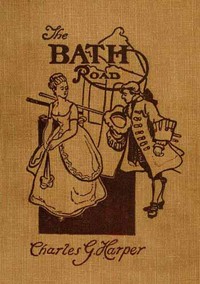
The Bath Road: History, Fashion, & Frivolity on an Old Highway — A Reader’s Guide
30
12
Project Gutenberg
2011
England -- Description and travel; England -- Social life and customs; Bath Road (England)
Readers of public-domain and historical texts
Project Gutenberg digital edition
en
Edition facts
Words: 57,462
Reading time: 250 min
Text sections: 10
Source:
Project Gutenberg record #37921
Harper's 1899 travelogue traces the Bath Road from London to Bath, blending historical anecdote, architectural observation, and social commentary on coaching inns, changing landscapes, and local industries.
Editorial Edition Score
4.8/5
★★★★★
★★★★★
Calculated from edition completeness, EPUB availability, text structure and catalogue metadata. Not a user rating.
Edition quality
Harper begins his account of the Bath Road not at its London terminus but with a dedication and preface that reveal the book's origin as two newspaper articles expanded into a sixty-thousand-word volume. He notes with regret that four inns pictured in these pages have already disappeared during the book's composition, and that once-rural stretches have become suburban. This sense of loss—of buildings, of rural character, of a way of travel—pervades the narrative. The reader is immediately placed in the role of witness to a vanishing world, as Harper documents what remains before it is swept away.
A Road of Vanished Inns and Changing Scenery
Harper's method is to proceed mile by mile from London westward, noting every inn, landmark, and local curiosity. At Knowl Hill he pauses over the curiously named "Bell and Bottle," speculating on its origin with a wry quotation from Hamlet. The "Seven Stars" and the "Horse and Groom" at Kiln Green receive brief but vivid descriptions: the latter is "gabled and embowered with vines, and facing up, not fronting, the road, in quite the ideal fashion." Such details accumulate to create a textured portrait of the roadside. Yet Harper also records losses: the old almshouse at Twyford survives, but the town itself is "losing its antique character" to new building. The road approaching Reading, once widened in 1255 to deter highwaymen, now passes through suburbs. Harper's eye is equally on the past and on the present's erasure of it.
Reading's Biscuits, Seeds, and Sauce
At Reading, Harper shifts from road description to a close study of the town's modern identity. He quotes a doggerel couplet—"'Mongst other things, so widely known, / For biscuits, seeds, and sauce"—and then examines each industry. Huntley & Palmer's biscuits dominate, but he also notes Cock's Reading Sauce and Sutton's seeds. The statue of George Palmer, erected during his lifetime, draws Harper's sharpest commentary: the effigy shows Palmer "in all the supremely un-decorative guise of everyday dress: homely coat, and trousers excruciatingly baggy at the knees; bareheaded, and in one hand a silk hat and an unfolded umbrella." He observes that this is "possibly the only instance in which these last necessary, but unlovely articles have been reproduced in bronze." The contrast between ancient Reading's great Abbey and this modern commercial monument is left implicit but unmistakable.
Cyclists and the Pace of Change
Harper occasionally steps back from description to remark on the altered experience of travel. He quotes a cycling paper that calls the run to Reading "a pleasant morning's spin from London," and then imagines reading that sentence to a great-grandfather who made the same journey painfully by coach. The remark is characteristic: Harper is alert to the way new technologies—the bicycle, the railway—have compressed time and distance, making the old road's hardships almost unimaginable. Yet he does not romanticize the past; he simply registers the shift. The preface had already noted that the book grew from four thousand to sixty thousand words, suggesting how much material the road yielded. The reader is invited to share Harper's double perspective: seeing the road as it is and as it was, with the awareness that even this record will soon be outdated.
The Author's Voice and Evidentiary Method
Harper's tone is that of a knowledgeable but genial companion, given to dry asides and precise observation. He does not invent; he reports what he sees and what he has read. The book is illustrated with his own drawings and with old prints, and the text frequently refers to these images. The preface acknowledges the assistance of E. T. Cook, editor of the Daily News, where the articles first appeared. Harper's authority rests on his having traveled the road, consulted documents, and noted details that others might miss. The reader who follows his account will gain not only a route map but a sense of how much history can be read in a roadside inn sign or a bronze umbrella. The book is a preservationist's work, made urgent by the very changes it chronicles.
Harper's book is best read as a series of discrete observations rather than a continuous narrative. The reader may dip into any section—each inn, town, or stretch of road is treated as a self-contained subject. The illustrations, though not reproduced here, are frequently referenced in the text and would repay attention in the original edition. For those interested in the physical remains of coaching-era England, this volume offers a detailed inventory of what stood at the close of the nineteenth century, much of it since lost.
Reader reflection
Your personal reading reflection
Build a private reading journal entry for this title.
Your progress
0
/
10
2
Did this book hold your interest?
3
Would you pass this book on to a friend?
4
How demanding did the text feel?
5
Would you start a conversation about this book?
6
How valuable was this book for your own interests?
7
Did any part of the book stay with you emotionally?
8
How understandable was the text?
9
Which lesson or insight stayed with you?
10