1

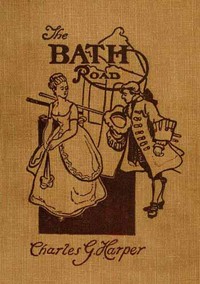
The Bath Road: History, Fashion, & Frivolity on an Old Highway — A Reader’s Guide
(11 User reviews)
3219
Project Gutenberg
2011
Not confirmed
England -- Description and travel; England -- Social life and customs; Bath Road (England)
Readers of public-domain and historical texts
Project Gutenberg digital edition
en
Edition facts
Words
57,462
Reading time
250 min
Text sections
10
For The Bath Road: History, Fashion, & Frivolity on an Old Highway — A Reader’s Guide, the stored edition analysis reports 57,462 words, 4 hr 10 min estimated reading time, and 10 detected text sections.
The text analysis averages about 26.5 words per sentence, while the detected sections provide another way to judge how the source is divided.
Project Gutenberg metadata also associates the work with “England -- Description and travel,” connecting these edition facts with the source record’s subject description.
Source:
Project Gutenberg record #37921
Harper's 1899 travelogue traces the Bath Road from London to Bath, blending historical anecdote, architectural observation, and social commentary on coaching inns, changing landscapes, and local industries.
Editorial Edition Score
4.8/5
★★★★★
★★★★★
Calculated from edition completeness, EPUB availability, text structure and catalogue metadata. Not a user rating.
How this score is calculated
- Description quality20 pts
- Title & short description10 pts
- Source metadata20 pts
- Text length15 pts
- Chapters / structure15 pts
- EPUB file integrity20 pts
Total of 100 points, scaled to a 2.5-5.0 range. Editions with an empty description or a missing EPUB file are not scored.
Edition quality
Read the Text
This was John Palmer, the proprietor of the Bath Theatre. He not only noted them, but devised a plan by which the post was rendered swifter and more secure. The stage-coaches of that time took thirty-eight hours to accomplish the journey between London and Bath, and, although safer for the carriage of correspondence than by post-boy, were not so speedy. Palmer had frequently travelled the roads, and he rightly conceived thirty-eight hours to be too long a time to take for a journey of 106 miles. He drew up a scheme for a mail-coach to carry four inside passengers, a coachman, and a guard, and to be drawn by four horses at the rate of between eight and nine miles an hour. In this manner, he argued, the journey between Bath and London should be accomplished, including stoppages, in sixteen hours. This plan, which he made as an instance, to be extended, if successful, to the other main roads throughout the kingdom, he communicated to the General Post Office. Two years passed before Palmer could get his proposals tried, but arrangements were eventually made, agreements entered into with five innkeepers along the London, Bath, and Bristol Road, for the horsing of the coach, and the first mail despatched from Bristol to London, August 2, 1784. The mounted post-boy's day was nearing its close, and by the summer of 1786, the trunk roads knew him and his post-horn no more.
The mail-coaches enjoyed great privileges, of which the greatest was their exemption from all turnpike tolls, and the right exercised by the Post Office of indicting roads which might be out of repair or in any way dangerous. By the year 1810, mail-coaches had increased so greatly that the estimated annual loss of the various turnpike trusts on this exemption was £50,000. And all the while the postal business was increasing by leaps and bounds, although the price of postage was increased from time to time to help supply the Government, which speedily came to recognize the Department as a milch cow, and to demand increasing annual payments from it, to help pay the costs of waging Continental wars.
Let us see what the postage between London, Bath, and Bristol was at different periods. The charges were regulated by distances, and one of the schedule measurements, "exceeding 80 miles and not exceeding 150 miles," just includes these two towns. We find, then, that it was possible to get a letter conveyed that distance in 1635 for 4_d._, while a bulky package weighing one ounce cost 9_d._ in transmission; not extravagant charges for that far-off time, even allowing for the greater purchasing power of money in the first half of the seventeenth century. Twenty-five years later the scale was altered, and one could despatch a note for a penny less, although it cost 3_d._ more for an ounce weight. From 1711 to 1765, the scale was--
Letter. One ounce. 4_d._ 1_s._ 4_d._
and from 1765 to 1784 the charges were again raised, to 5_d._ and 1_s._ 8_d._ respectively. Matters then went from bad to worse. In the beginning of 1797, the figures were 7_d._ and 2_s._ 4_d._; while the climax was finally reached at the beginning of this century, for on July 9, 1812, it cost 9_d._ to send a note between London, Bath, or Bristol, and 3_s._ for one ounce. A singular fact, in face of these repeated increases, was the growth of the Post Office revenues. In 1796, the net profit was £479,000; ten years later it had risen to considerably over one million sterling. The Bristol profit on Post Office business was £469 in 1794-5, and at that time the postmaster received a salary of £110 per annum. The Bath postmaster's billet was the best in the service, for he received £150, and, moreover, had the assistance of one clerk and three letter-carriers.
Meanwhile the stage-coaches had increased greatly. It was about 1800 that the "Sick, Lame, and Lazy"--a sober conveyance so called from the nature of its passengers, invalids, real and imaginary, on their way to Bath--was displaced by the new post coach that performed the journey in a single day; and thus the comfortable, _and_ expensive, beds of the "Pelican" at Speenhamland, where "the coach slept," began to be disestablished.
[Sidenote: _"GOD-PERMITS"_]
Our forefathers of the coaching age were properly pious. Desirous, when they travelled, of a "happy issue out of all their afflictions," as the Prayer-book has it--which in their case included such varied troubles as highwaymen's attacks, being upset, or finding themselves snowed up, with the extreme likelihood in winter-time of being severely frostbitten--they made their wills, and fervently committed themselves to the protection of Providence before starting and putting themselves in the care of the coachman. Coach proprietors, for their part, always advertised their conveyances to run "D.V.;" and the more slangy among our great-grandparents were accordingly accustomed to speak of these coaches as "God-permits." Express trains, which stop for nothing in heaven above or the earth beneath, short of a cataclysm of nature, have relegated that joke to the domains of archæology. Then, however, it had its poignant side.
"The perils of the road in winter and foul weather," says one who braved them, "were formidable. On one occasion I rode sixteen hours under a deluging downpour of rain that never ceased for a single minute, and was so crushing in its effect as to disable every umbrella on the roof before the first hour had elapsed. On another occasion I started at six on a winter's morning outside the Bath "Regulator," which was due in London at eight o'clock at night. I was the only outside passenger. It came on to snow about an hour after we started--a snowstorm that never ceased for three days. The roads were a yard deep in snow before we reached Reading, which was exactly at the time we were due in London. Then with six horses we laboured on, and finally arrived at Fetter Lane at a quarter to three in the morning. Had it not been for the stiff doses of brandied coffee swallowed at every stage, this record would never have been written. As it was, I was so numbed, hands and feet, that I had to be lifted down, or rather, hauled out of an avalanche or hummock of snow, like a bale of goods. The landlady of the 'White Horse' took me in hand, and I was thawed gradually by the kitchen fire, placed between warm pillows, and dosed with a posset of her own compounding. Fortunately, no permanent injury resulted."
[Sidenote: _SNOWSTORMS_]
That was as late as 1816. Happily, although the term "an old-fashioned winter," is one frequently employed nowadays to denote one of exceptional severity, there is no reason to believe that such winters were less exceptional then than they are now. But the great frosts and snowstorms of those times belong to history, and although they only occurred (as they do now) at considerable intervals, they bulk largely in the records of the past.
The great snowstorm of December 26, 1836, dislocated the coach service all over the country. The drifts on Marlborough Downs varied in depth from fourteen to sixteen feet. The Duke of Wellington, who was travelling down the road to the Duke of Beaufort's place at Badminton, arrived at Marlborough on the Monday night, in the thick of it, and put up at the "Castle." He was journeying in a carriage and four, with outriders, and started again the next morning, to be promptly stuck fast in a wheatfield. A number of labourers were procured, who dug him out.
On that memorable occasion, the Bath and Bristol mails, which were due at those places on the Tuesday morning, were abandoned eighty miles from London, the mail-bags being brought up by the two guards in a post-chaise with four horses. For seventeen miles they had to come by way of the fields.
Three outside passengers died of the cold when one of the stage coaches reached Chippenham, and frostbites were innumerable.
But if all the untoward coaching incidents were recounted that befell upon the Bath Road, this would resolve itself into a dismal record, and it might then be supposed that coaching was invariably dangerous and uncomfortable, which was not the case. One of the most singular of these happenings was that in which a home-coming sailor was killed. A gunner named John Baker was wrecked on board the frigate _Diomede_, off the coast of Trincomalee, and narrowly escaped being drowned. Being picked up, he recovered sufficiently to be able to take a part in the storming of that place, and was sent home with the ship bearing the despatches. When he set foot again in England, he must naturally have thought all dangers past; but, coming up from Bath in January, 1796, the coach capsized at Reading, and the unhappy gunner, who had survived all perils of battle and the breeze, was killed.
A not dissimilar accident happened in July, 1827, when the Bath mail was overturned between Reading and Newbury, through the horses bolting into a gravel-pit. A naval officer was killed, and most of the passengers injured.
Although the latter accident happened in an age of very fast coaches, it is a fact that disasters were actually fewer than they had been in more leisurely times. The reasons for this increased safety in times when speed was vastly greater may be found in the facts that the roads were better kept, and the coaches better built. A whole series of Turnpike Acts had been passed in the course of the previous fifty years, resulting in roads as nearly perfect as roads can be, while the coachbuilder's trade had become almost an exact science. Had it not been for the occasional recklessness or drunkenness of drivers, and the winter fogs, there would be little to record in the way of accidents. As it was, coachmen sometimes (but very rarely) took a convivial glass too much; or, more often, raced opposition coaches to a final smash; and then there were the "pea-soupers" of fogs, which led the most experienced astray.
The following story belongs to the first quarter of this century, and is told by one of the old drivers: "I recollect," he says, "a singular circumstance occasioned by a fog. There were eight mails that passed through Hounslow. The Bristol, Bath, Gloucester, and Stroud took the right-hand road; the Exeter, Yeovil, Poole, and 'Quicksilver' Devonport (which was the one I was driving) went the straight road towards Staines. We always saluted each other when passing with 'Good night, Bill,' 'Dick,' or 'Harry,' as the case might be. I was once passing a mail, mine being the fastest, and gave my wonted salute. A coachman named Downs was driving the Stroud mail. He instantly recognized my voice, so said, 'Charley, what are you doing on my road?' It was he, however, who had made the mistake; he had taken the Staines instead of the Slough road out of Hounslow. We both pulled up immediately; he had to turn round and go back--a feat attended with some difficulty in such a fog. Had it not been for our usual salute, he would not have discovered his mistake before arriving at Staines."
One of the most striking differences between the coaching age and these railway times lies in the altered relations between passenger and driver. No railway passenger ever thinks of the man who drives the engine. He, in fact, rarely sees him. The coachman, on the other hand, was very much in evidence, and was not only seen, but expected to be "remembered" as well. And "remembered" the old coachmen were, too: for half a crown each to driver and guard was the least one could do in those times. How great a tax this was upon the traveller may be guessed when it is said that the coachman was generally changed about every fifty miles or so. The guard would probably accompany the coach all the way to Bath, but on the longer journeys there were at least two. There was a very simple formula used, as a hint to passengers that a tip should be forthcoming. "I go no further, gentlemen," the coachman would observe, putting his head in at the window. A simultaneous dipping of the hands into fobs on the part of the passengers resulted from this piece of information, and the coachman would depart, richer by considerably over half a sovereign. Imagination does not go to the length of picturing the driver or the guard of a train doing the like.
It is not, however, to be supposed that coach passengers greatly delighted in the practice, even in those fine open-handed days. There were many who could not afford it, and others who regarded it as an imposition. But they tipped all the same, because, as Mr. Chaplin, the great coach proprietor in those palmy days, observed, if they did not the guard and coachman "would look very hard at them." Better to face a lioness robbed of her cubs than a coachman defrauded of his tip. Passengers, therefore, resigned themselves with a sigh to the expenditure, and travelled as little as they possibly could. There can, indeed, be no doubt that tipping, grown to a regular system, injured the coach proprietors' business; and it was eventually, if not abolished entirely, at least shorn of its more grandiose proportions. The first man to tackle the question was Thomas Cooper. He was proprietor of a line of coaches running between London and Bristol from 1827 to 1832. "Cooper's Old Company," he called his business. He had originally been landlord of the "Castle Hotel" at Marlborough, but gave it up and removed to Thatcham, where he took a cottage and built stables for his coaching stud. Here he was practically halfway between London and Bristol, and his day and night coaches stopped to dine and sup at "Cooper's Cottage," as, with a sense of the value of alliteration, he called it. All his advertisements bore the announcement, "No fees," and the same pleasing legend was writ large on the backs of his coaches.
Cooper paid his coachmen and guards considerably higher wages, to compensate them for the loss of their tips. He became bankrupt in 1832, and sold his business to Chaplin, who afterwards, through his interest in the railway world, obtained him the post of stationmaster at Richmond, near London. From this position he eventually retired on a pension, and died about fifteen years ago.
We all know the cantankerous passenger in the railway carriage who makes himself objectionable in a variety of ways, but a coach was a much more fruitful source of contention. Fortunately, however, it was not often that the incident of the strong man in the Bath coach bound for London was repeated. A corpulent person of prodigious strength tried to secure a place in the mail, but, all the seats being booked, he was told that it was impossible to convey him that night. Relying upon his strength and the unlikelihood of any one daring to disturb him, he got in while the coach was still standing in the stable yard, and waited. He had to wait so long, and had dined so well, that he fell asleep, and the coachman, finding him there, snoring, put his team into another coach, leaving the fat man in peaceable possession of his seat. He awoke in the middle of the night, still, of course, in the stable yard of the "White Lion" at Bath, while the road echoed with the laughter of the coachman and his friends all the way up to London.
[Sidenote: _"FULL INSIDE"_]
In that incident the passengers were fortunate. The "insides" were less to be congratulated who bore a part in the memorable journey down to Bath from Piccadilly with an extra passenger. It is of the Bath mail that the story is told. Mail coaches carried four inside. One night, when the mail was ready to start from Piccadilly, full up, inside and out, a gentleman who wanted to go to Marlborough came hurrying up. He was well known to coachman and guard as a regular customer; but, although they did not want to leave him behind, there seemed to be no alternative. He solved the difficulty himself by squeezing in as the coach started; and so, packed as tightly as herrings in a barrel, they rumbled away, amid the muttered curses of the original occupants. The misery of that journey may be better imagined than described, and when the coach halted at the "Bear" at Maidenhead, it might be supposed that the "insides" would have been only too pleased to get out for a momentary relief when the guard appeared at the door and made what was usually the pleasant announcement, "Time to get a cup of coffee here, gentlemen." Did they get out? Oh no! They were so tightly wedged that they dared not move, afraid lest they should not be able to get in again. So they endured to the bitter end, and there can be no doubt whatever that when Marlborough was reached, they "sped the parting guest" with exceptional heartiness.
The inn from which this coach started was the "White Bear," Piccadilly, which stood, until about the year 1860, on the site now occupied by the Criterion Restaurant. It was a curious old place, chiefly of wood, and had a great effigy of a polar bear on its frontage. This "White Bear" sign is still in existence, but rusticated to the lonely hamlet of Fickles Hole, near Croydon, where it stands in the little garden of the "White Bear" inn.
A very swagger stage-coach, the "York House," was started between Bath and London in 1815, followed by a rival, the "Beaufort Hunt." The first-named started from the "York House Hotel" at Bath; the "Beaufort Hunt" from the "White Lion." Both were fast day coaches; and, perhaps because of racing, the "Beaufort Hunt" was upset twice in a fortnight, soon after it had been put on the road. It was a sporting age, but not so sporting that passengers were prepared to risk life and limb in taking part in this keen rivalry. Accordingly, the "Beaufort Hunt" fell upon evil times, and the proprietor had to dismiss his too zealous drivers. He was, however, fortunate in his new coachman, who was exceptionally civil and obliging, and eventually regained the position of the coach, which, although it kept up a furious pace of eleven miles an hour, remained for years a prime favourite with the more dashing travellers along the road.
This and the other crack coaches, which continued running until the Great Western Railway finally took them away on trucks, quite cut out the mails, which, from being the fastest coaches on the road, soon came to occupy a very middling position.
[Sidenote: _THE AUGUSTAN AGE_]
In 1821, the mail-coaches had reached a speed of nearly eight and three-quarter miles an hour, including stoppages. They started from the General Post Office at 8 p.m., and reached Bristol at 10 a.m. the following morning. At the same period the two fast stage-coaches just described were doing their eleven miles an hour, and in 1830 were actually timed a mile an hour faster, while the mail was very little accelerated, if at all. Some years later, indeed (in 1837), the Bristol mail was wakened up, and performed the 121 miles in 11 hrs. 45 min., or at the rate of ten miles and a quarter an hour, including changes, of which there were fourteen. This was the fine flower of the Coaching Age on the Bath Road. There were then about fifteen or sixteen day and night coaches between London and Bath, and two mails, all running full. On June 4, 1838, the Great Western Railway was opened as far as Slough, and the coaches ran only between that place and Bath. In March, 1840, the railway was open as far as Reading; and June 30, 1841, saw trains running between London, Bath, and Bristol, and the road deserted.
The difference between those times and these is sufficiently striking to demand some attention. Fares by mail were 4_d._ a mile; by stage-coach, from 4_d._ to 3-1/2_d._ a mile inside, and 2_d._ outside. Or, if one wanted to travel somewhat cheaper, and did not mind an all-night journey, the fares by night coach were about 2-1/2_d._ and 1-1/2_d._ respectively. The cost of travelling to Bath was therefore anything from 35_s._ down to 14_s._ To these figures 5_s._ or 6_s._ should be added, for coachmen and guards always expected to be tipped, while something like half a sovereign for refreshments was essential.
Harper begins his account of the Bath Road not at its London terminus but with a dedication and preface that reveal the book's origin as two newspaper articles expanded into a sixty-thousand-word volume. He notes with regret that four inns pictured in these pages have already disappeared during the book's composition, and that once-rural stretches have become suburban. This sense of loss—of buildings, of rural character, of a way of travel—pervades the narrative. The reader is immediately placed in the role of witness to a vanishing world, as Harper documents what remains before it is swept away.
A Road of Vanished Inns and Changing Scenery
Harper's method is to proceed mile by mile from London westward, noting every inn, landmark, and local curiosity. At Knowl Hill he pauses over the curiously named "Bell and Bottle," speculating on its origin with a wry quotation from Hamlet. The "Seven Stars" and the "Horse and Groom" at Kiln Green receive brief but vivid descriptions: the latter is "gabled and embowered with vines, and facing up, not fronting, the road, in quite the ideal fashion." Such details accumulate to create a textured portrait of the roadside. Yet Harper also records losses: the old almshouse at Twyford survives, but the town itself is "losing its antique character" to new building. The road approaching Reading, once widened in 1255 to deter highwaymen, now passes through suburbs. Harper's eye is equally on the past and on the present's erasure of it.
Reading's Biscuits, Seeds, and Sauce
At Reading, Harper shifts from road description to a close study of the town's modern identity. He quotes a doggerel couplet—"'Mongst other things, so widely known, / For biscuits, seeds, and sauce"—and then examines each industry. Huntley & Palmer's biscuits dominate, but he also notes Cock's Reading Sauce and Sutton's seeds. The statue of George Palmer, erected during his lifetime, draws Harper's sharpest commentary: the effigy shows Palmer "in all the supremely un-decorative guise of everyday dress: homely coat, and trousers excruciatingly baggy at the knees; bareheaded, and in one hand a silk hat and an unfolded umbrella." He observes that this is "possibly the only instance in which these last necessary, but unlovely articles have been reproduced in bronze." The contrast between ancient Reading's great Abbey and this modern commercial monument is left implicit but unmistakable.
Cyclists and the Pace of Change
Harper occasionally steps back from description to remark on the altered experience of travel. He quotes a cycling paper that calls the run to Reading "a pleasant morning's spin from London," and then imagines reading that sentence to a great-grandfather who made the same journey painfully by coach. The remark is characteristic: Harper is alert to the way new technologies—the bicycle, the railway—have compressed time and distance, making the old road's hardships almost unimaginable. Yet he does not romanticize the past; he simply registers the shift. The preface had already noted that the book grew from four thousand to sixty thousand words, suggesting how much material the road yielded. The reader is invited to share Harper's double perspective: seeing the road as it is and as it was, with the awareness that even this record will soon be outdated.
The Author's Voice and Evidentiary Method
Harper's tone is that of a knowledgeable but genial companion, given to dry asides and precise observation. He does not invent; he reports what he sees and what he has read. The book is illustrated with his own drawings and with old prints, and the text frequently refers to these images. The preface acknowledges the assistance of E. T. Cook, editor of the Daily News, where the articles first appeared. Harper's authority rests on his having traveled the road, consulted documents, and noted details that others might miss. The reader who follows his account will gain not only a route map but a sense of how much history can be read in a roadside inn sign or a bronze umbrella. The book is a preservationist's work, made urgent by the very changes it chronicles.
Harper's book is best read as a series of discrete observations rather than a continuous narrative. The reader may dip into any section—each inn, town, or stretch of road is treated as a self-contained subject. The illustrations, though not reproduced here, are frequently referenced in the text and would repay attention in the original edition. For those interested in the physical remains of coaching-era England, this volume offers a detailed inventory of what stood at the close of the nineteenth century, much of it since lost.
There’s something tender about reading Harper’s 1899 accounts of coaching inns along the Bath Road, knowing the motorcar was already waiting in the wings. That same quiet ache for a passing world returned when I opened Through East Anglia in a Motor Car — Edition Insights. Different county, different machines, but the same wistful noticing of hedgerows and old milestones slipping by, almost gone before you’ve fully looked.
Wyatt Hernandez
4 weeks agoEmma Roberts
4 weeks agoSophia Nelson
1 week agoTheodore Wright
3 weeks ago-

Catherine Perkins - 3 weeks ago
The book is overly focused on minor historical trivia and lacks a strong narrative arc. The writing is dry and reads more like a textbook than a story. It fails to bring the Bath Road to life, making it a tedious read for anyone not already deeply interested in the subject. -
Brittany Francisco Reynolds - 2 weeks ago
This book covers the Bath Road's history in satisfying detail, but it can be a bit academic at times. Readers looking for a light read might find some parts heavy, but for those interested in historical travel routes, it's a worthwhile choice. -
Deborah Keith Moore - 1 week ago
A charming and detailed history of the Bath Road! The author weaves together stories of coaches, local customs, and the rise of travel that are both educational and engaging. The book offers a fascinating window into England's past, with lively descriptions that make you feel like a traveler on the old highway.
Reader reflection
Your personal reading reflection
Build a private reading journal entry for this title.
Your progress
0
/
10
2
Did this book hold your interest?
3
Would you pass this book on to a friend?
4
How demanding did the text feel?
5
Would you start a conversation about this book?
6
How valuable was this book for your own interests?
7
Did any part of the book stay with you emotionally?
8
How understandable was the text?
9
Which lesson or insight stayed with you?
10


Isabella Green
1 month ago