1

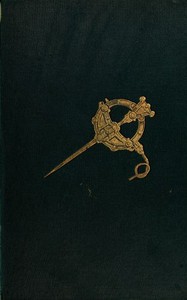
Beauties and Antiquities of Ireland Being a Tourist's Guide to Its Most Beautiful Scenery & an Archæologist's Manual for Its Most Interesting Ruins — Text and Context
1714
8
Project Gutenberg
2012
Ireland -- Description and travel; Ireland -- Antiquities
Readers of public-domain and historical texts
Project Gutenberg digital edition
en
Edition facts
Words: 88,761
Reading time: 386 min
Text sections: 9
Source:
Project Gutenberg record #39500
Russell's 1897 guide blends scenic description with archaeological detail, arguing that Irish history is as compelling as its landscapes. The prose shifts between brisk travelogue and dense antiquarian analysis, with a critical eye toward earlier writers.
Editorial Edition Score
4.8/5
★★★★★
★★★★★
Calculated from edition completeness, EPUB availability, text structure and catalogue metadata. Not a user rating.
Edition quality
Russell opens with a pointed critique of earlier guidebooks, dismissing many as written by persons "utterly unfitted" for the task, their historical remarks "incorrect and misleading." This combative tone sets the stage for a work that aims to correct errors while celebrating Ireland's ruins and scenery. The narrative voice is authoritative and opinionated, frequently shifting from brisk travel directions to dense archaeological argument.
A Polemical Preface and a Dual Purpose
The preface establishes the book's dual aim: to serve as both a tourist's guide and an archaeologist's manual. Russell insists that Irish history is "as generally interesting as Irish scenery is generally beautiful," and he selects only historic sites. He lambasts previous authors for their ignorance of Irish language and literature, claiming their works would be improved if "the printed matter were torn out." This combative stance recurs throughout, lending the prose a crusading energy. The preface also reveals a self-imposed limitation: the book cannot be an encyclopedia, so many places are omitted. Readers should expect a selective, argument-driven tour rather than a comprehensive catalogue.
The Ruins of Mellifont: A Case Study in Loss
Russell's treatment of Mellifont Abbey exemplifies his method. He describes its near-total destruction, noting that "hardly a vestige" of its high walls remains, and speculates that the stones were carted away to an unknown location. He contrasts its current obscurity with what it might have been: "one of the most beautiful ecclesiastical ruins in Europe." The passage moves from physical description to historical conjecture, noting that the abbey's Irish name is unknown—annalists called it the "Drogheda Monastery." Russell then traces its founding in 1142 by O'Carrol, Prince of Oriel, and links its architectural style to broader trends: the cessation of Danish raids and Norman-French influence. He argues that the Norman invasion of Ireland arrested architectural development, a claim he supports by noting that most great churches predate Strongbow.
Rhythm and Digression: The Narrative Engine
Russell's prose moves in unpredictable rhythms. A typical section might begin with a scenic description, then veer into a historical anecdote, then a linguistic note, then a complaint about modern neglect. The Mellifont entry, for instance, jumps from the missing stones to a mill built eighty years prior, to the abbey's Latin name, to the Four Masters, to the Board of Works excavations, to St. Bernard, to a castle from after the Anglo-French invasion. This associative structure mirrors a walking tour where one sight prompts another. The voice remains consistently opinionated: "strange and hard to be understood" is a typical phrase. Readers should expect digressions and abrupt shifts in scale, from a single stone to a century of history.
Russell's guide rewards readers who enjoy a strong authorial presence and are willing to follow his associative leaps. The book is best approached not as a systematic reference but as a personal, argumentative journey through Ireland's ruins. Pay attention to the moments when Russell pauses to correct earlier writers—these asides reveal his core concerns about historical accuracy and cultural respect.
Reader reflection
What was your reading experience?
Capture what you thought, learned, and would like to remember.
Your progress
0
/
10
2
How much did you enjoy the reading experience?
3
Would you encourage someone else to read it?
4
How much effort did this book require?
5
Would you like to discuss this book with someone?
6
Did anything about the book feel genuinely new?
7
Was the book what you thought it would be?
8
What was its emotional impact?
9
What did this book teach you most?
10